

What Is a Senior Medical Alert ID: A Safety Guide
Posted by Mack Johnson on May 30th 2026
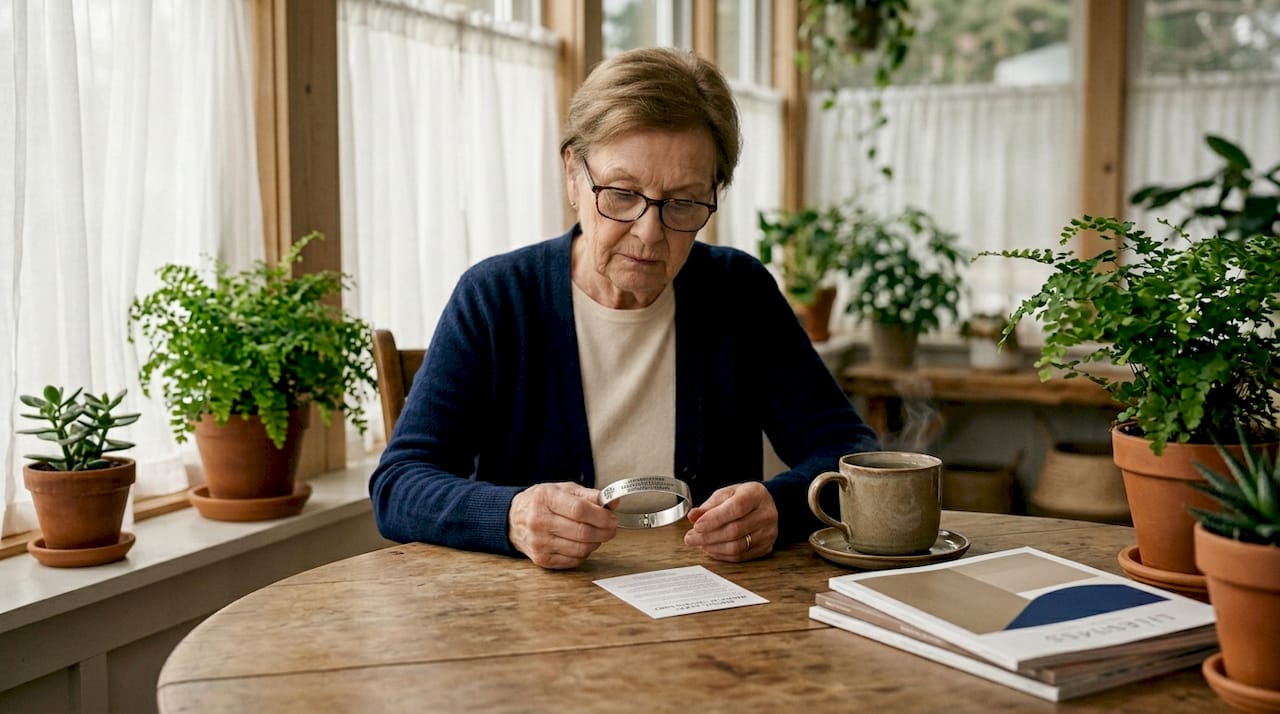
If you’ve ever wondered what a senior medical alert ID is, you’re not alone. Many seniors and caregivers confuse these small but powerful tools with full medical alert systems. They are actually different things, and understanding that difference could matter in a life-or-death moment. A senior medical alert ID, more formally known as a medical identification tag or medical ID, is a wearable piece of identification that carries critical health information directly on the body. For anyone managing a chronic condition like diabetes, heart disease, or epilepsy, wearing one is one of the simplest safety measures available.
Table of Contents
- Key takeaways
- What a senior medical alert ID actually is
- How medical IDs work during an emergency
- Comparing types of senior medical IDs
- Practical tips for using and maintaining your medical ID
- My take: why seniors underestimate this tool
- Divotiusa medical IDs: built for real-world protection
- FAQ
Key takeaways
| Point | Details |
|---|---|
| Medical IDs vs. alert systems | Medical alert IDs are wearable identification pieces, not devices connected to monitoring centers. |
| Who benefits most | Seniors with chronic conditions, allergies, or communication difficulties gain the most from wearing a medical ID. |
| What first responders check | Emergency personnel are trained to look for medical IDs immediately during an assessment. |
| Digital options exist | QR and NFC-enabled IDs allow responders to access far more health data than engraving alone. |
| Consistent wear is everything | A medical ID only works if it is worn. Choosing a comfortable, well-fitted style increases daily compliance. |
What a senior medical alert ID actually is
A senior medical alert ID is a wearable identification tool that stores critical health and contact information on or near the body. The term “senior medical alert ID” is commonly used online, but the recognized industry term is simply “medical ID” or “medical identification.” Both refer to the same concept: a physical or digital item worn by a person so that emergency responders can access health information quickly, even when the person cannot speak.
It is easy to mix this up with a medical alert system, which is an entirely different product. A medical alert system typically involves a wearable button connected to a 24/7 monitoring center that dispatches help when you press it. A medical ID does not connect to anything. It simply carries your information in a format that anyone can read.
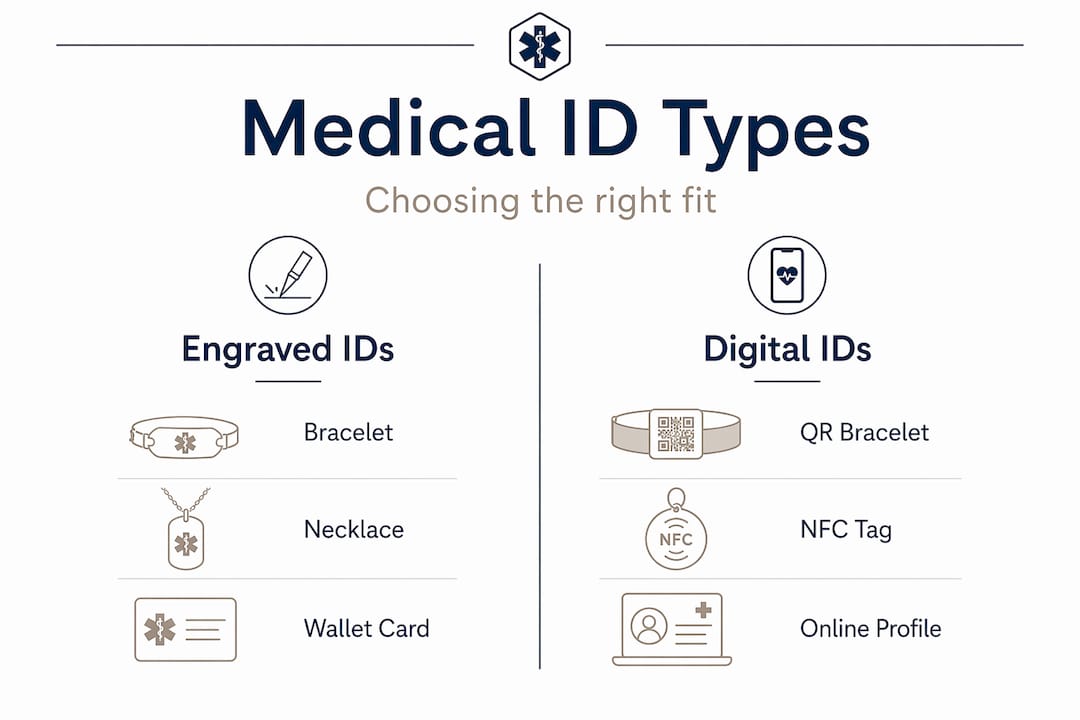
Medical alert IDs for seniors typically come in several formats:
- Engraved bracelets: The most traditional format. Key information is etched directly onto a metal plate attached to a bracelet. Durable, readable, and requires no battery or subscription.
- Pendant necklaces: Same concept as bracelets but worn around the neck. A good option for seniors who find wrist jewelry uncomfortable.
- Wallet cards: Flat cards carried in a wallet or purse. Useful as a backup, but less reliable since responders may not always check a wallet first.
- QR code or NFC-enabled IDs: A newer format where a scannable code links to a secure online profile with detailed medical information.
Each format serves the same core purpose. The right choice depends on the wearer’s comfort, health complexity, and daily routine.
How medical IDs work during an emergency
Picture this: a senior collapses at a grocery store. They are unconscious. They cannot tell the paramedics they are diabetic, that they take blood thinners, or that they are allergic to penicillin. This is exactly the scenario a medical ID is designed for.

Emergency responders are trained to check the wrists, neck, and sometimes the wallet for a medical ID during their initial assessment. It is part of standard protocol. Finding one gives them immediate access to information that could change how they treat the patient.
Here is the kind of information a well-prepared medical ID can carry:
- Chronic conditions (diabetes, epilepsy, heart disease, COPD)
- Known allergies, especially to medications
- Current medications and dosages
- Blood type
- Primary care physician’s name and number
- Emergency contact name and phone number
- Do Not Resuscitate (DNR) status if applicable
For seniors with dementia or speech impairments, the ID becomes even more critical. QR and NFC-enabled bracelets let responders scan the tag with a smartphone and instantly pull up a full medical profile, including GPS location alerts sent to family members.
Pro Tip: If your loved one has a complex medical history that won’t fit on an engraved plate, consider a QR-enabled ID. It gives responders access to a full digital profile with no character limit.
The speed benefit is real. Every minute matters in a cardiac event, a severe allergic reaction, or a diabetic crisis. Having the right information immediately can prevent dangerous treatment errors and reduce response time significantly.
Comparing types of senior medical IDs
Choosing the right medical alert identification for a senior is not a one-size-fits-all decision. The best ID is the one that gets worn every day. That means comfort, style, and practical function all matter.
| Type | Best for | Pros | Cons |
|---|---|---|---|
| Engraved bracelet | Most seniors; everyday use | No tech required; very durable; always readable | Limited space; requires re-engraving to update |
| Engraved necklace pendant | Seniors who dislike wrist jewelry | Discreet; comfortable for sleep | Can be tucked under clothing and missed |
| QR/NFC smart ID | Complex medical histories | Unlimited info storage; easy to update online | Requires a smartphone to scan; subscription may apply |
| Wallet card | Backup identification | Easy to carry; extensive info | Not on the body; can be overlooked by responders |
When helping a senior choose, consider these factors:
- Comfort and fit: An ID that pinches or irritates the skin will not get worn. Look for adjustable designs and materials suited to sensitive skin.
- Readability: Engraving font size and contrast matter. Choosing the right metal type affects both durability and legibility.
- Ease of updating: If the senior’s medications or conditions change frequently, a digital ID with an online portal is far easier to maintain than a re-engraved piece.
- Style: Seniors are more likely to wear a medical ID that looks good. Bracelet styles that feel personal significantly increase consistent use.
- Daily routine: Matching the ID format to lifestyle leads to better compliance. An active senior who swims or exercises needs waterproof, secure options.
For seniors in assisted living settings, checking whether the facility has specific protocols around medical ID documentation is worth doing. Some facilities keep records on file but still recommend wearable IDs as a first line of identification in an emergency.
Practical tips for using and maintaining your medical ID
Owning a medical ID is only useful if the information on it is accurate and the ID is actually being worn. Here is how to get both right.
-
Start with the core information. Name, primary condition, known drug allergies, and one emergency contact number are the minimum. Custom engraving should prioritize clarity and brevity. Abbreviations recognized by medical professionals (e.g., “NKDA” for No Known Drug Allergies, “T2DM” for Type 2 Diabetes) help maximize limited space.
-
Review the information at least twice a year. Set a calendar reminder. After any new diagnosis, change in medication, or surgery, update the ID before anything else. Digital IDs make this easy since you can log into a portal and edit the profile within minutes.
-
Build wearing the ID into a daily routine. Put it on with your watch. Set it by the bedside so it is the first thing you reach for in the morning. Seniors who link wearing their ID to another existing habit are more consistent.
-
Caregivers should do a monthly ID check. Confirm the ID is being worn, the clasp or band is secure, the engraving is still legible, and the information is current. Think of it the same way you would check a smoke alarm battery.
-
Have a backup. A wallet card with the same information is a smart secondary measure, especially for seniors who travel or have home health aides who may not know their full history.
Pro Tip: For seniors with dementia, consider attaching a small card to the ID explaining what it is and asking anyone who finds them to call the number listed. It turns the ID into a communication tool even when the wearer cannot explain it themselves.
Wearing a well-designed senior ID consistently is one of the lowest-effort, highest-impact safety measures available. The habit takes seconds. The protection it provides can last a lifetime.
My take: why seniors underestimate this tool
I’ve spent years working alongside seniors and caregivers, and one pattern stands out clearly. Medical IDs are one of the most underused safety tools in senior care. People spend time researching fall mats, alert buttons, and home modifications, and then skip a $30 bracelet that could directly save their life.
In my experience, the hesitation usually comes from one of three places. Some seniors feel it makes them look sick or fragile. Others think it is only necessary for “serious” conditions. And many simply forget to make it a habit. All three are understandable, but none hold up when you consider what happens in a real emergency.
What I’ve learned is that framing matters. When caregivers present the ID as a piece of personal jewelry rather than a medical device, seniors respond much better. When the design is attractive and feels like something worth wearing, compliance goes up dramatically. That is not a superficial concern. It is the difference between a tool that works and one that sits in a drawer.
My take on the “serious condition” objection: if you take any prescription medication, you qualify. One medication interaction in an emergency room can be catastrophic. An ID prevents that.
The seniors I’ve seen benefit most are those whose caregivers treated the ID as a non-negotiable part of daily life, not an optional accessory. Make it part of the morning routine. Check it regularly. Update it without delay. That level of consistency is what turns a simple piece of jewelry into a genuine lifesaver.
— Mack
Divotiusa medical IDs: built for real-world protection
When you are choosing a medical ID for yourself or a loved one, quality and clarity are non-negotiable. Divotiusa specializes in custom engraved medical alert jewelry crafted from durable materials with legibility built in. Every piece is designed to be worn comfortably every day, with adjustable styles suited for seniors at any activity level. You choose exactly what information appears, and the engraving is precise enough that first responders can read it at a glance. Whether you need a classic stainless steel bracelet or a more elegant design, Divotiusa offers options that feel personal without compromising on safety.
FAQ
What information goes on a senior medical alert ID?
Most medical IDs include the wearer’s name, primary medical conditions, drug allergies, current medications, and one emergency contact number. If space allows, blood type and physician contact are also useful.
How is a medical ID different from a medical alert system?
A medical ID is a wearable identification piece with health info engraved or stored on it. A medical alert system is a device connected to a monitoring center that sends help when a button is pressed. They are separate products that can complement each other.
Do first responders actually check for medical IDs?
Yes. Emergency personnel check wrists and neck for medical IDs as part of standard assessment protocol. Finding one can immediately guide treatment decisions and prevent medication errors.
What is the best type of medical ID for a senior with dementia?
A wearable engraved bracelet is typically the most reliable option because it stays on the body and requires no technology to read. Adding a QR-enabled ID as a supplement allows responders to access a full profile with emergency contact notifications.
How often should you update a senior medical alert ID?
Review the information at least twice a year, and update it immediately after any change in diagnosis, medications, or emergency contacts. Digital IDs with online portals make updates quick and do not require re-engraving.
Recommended
- What Is Medical Identification Standard: Your Safety Guide - Divoti Inc.
- Why Medical IDs Save Lives When You Can’t Speak - Divoti Inc.
- Why Seniors Need Emergency Contact Jewelry - Divoti Inc.
- How to Select Medical Alert Metal Type Safely - Divoti Inc.
Shop related Divoti medical IDs: browse our senior medical alert bracelets and necklaces with free custom engraving. Most styles are HSA/FSA eligible.
About the author: Mack Johnson is Senior Operations Manager at Divoti Inc. in San Marcos, California, where he has led operations, marketing and customer experience since 2013. Before Divoti, he spent 12 years as a Public Health Services District Director with the Vermont Department of Health, leading regional public health operations and community health planning. He holds a bachelor’s degree from the University of Vermont. Connect with Mack on LinkedIn.