
Why Custom Engraved Medical IDs Matter for Safety
Posted by Mack Johnson on May 24th 2026
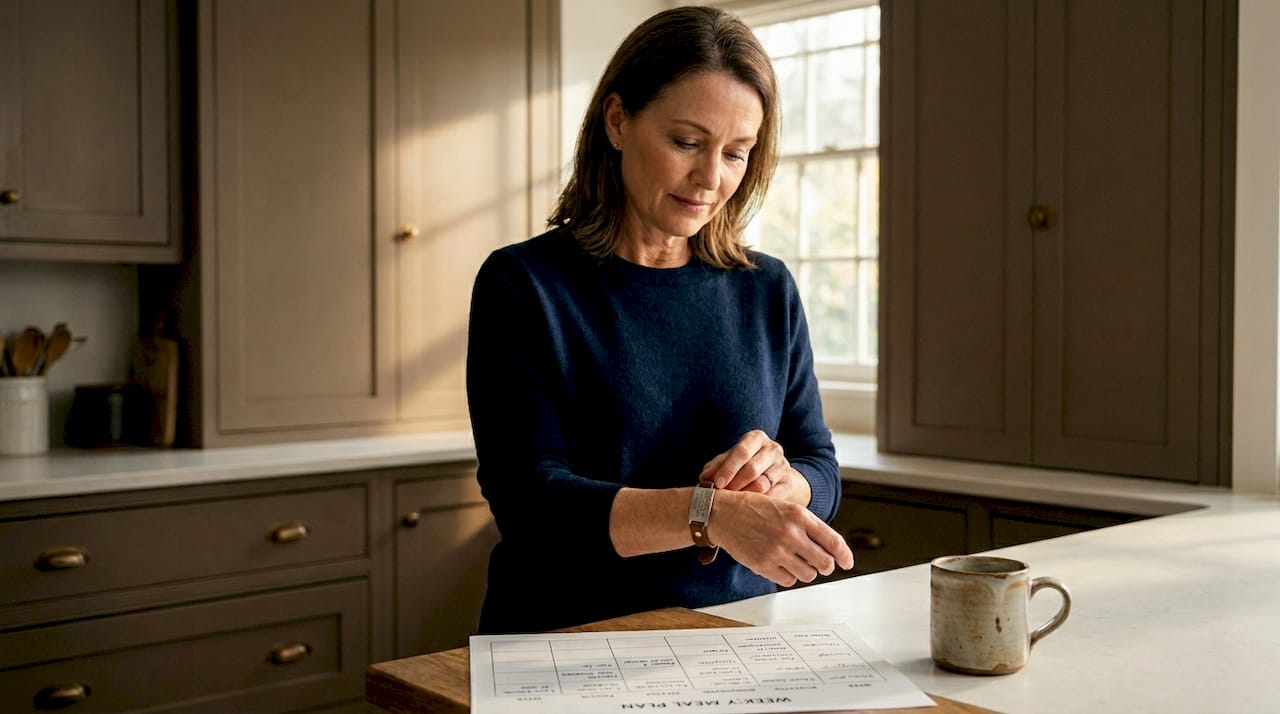
A medical emergency can unfold in seconds. When you’re unconscious or unable to speak, you cannot tell a paramedic about your penicillin allergy or the warfarin you take every morning. Understanding why custom engraved medical IDs matter is the difference between receiving the right treatment immediately and experiencing a preventable, potentially fatal error. These small pieces of jewelry carry information that speaks for you when you can’t. This article covers what to engrave, how engraved IDs compare to digital options, and what you need to do right now to protect yourself.
Table of Contents
- Key takeaways
- Why custom engraved medical IDs matter in emergencies
- What to engrave for maximum clarity
- Engraved IDs vs. digital and QR code options
- Practical tips for keeping your medical ID accurate
- My take on why this still matters in 2026
- Get your custom medical ID from Divotiusa
- FAQ
Key takeaways
| Point | Details |
|---|---|
| Passive, instant communication | Engraved IDs require no technology and work immediately in any emergency. |
| Specificity saves lives | Vague terms like “allergies” delay care. Precise info like “Allergic: penicillin” prevents errors. |
| Engrave stable information | Choose permanent details like chronic conditions and severe allergies for the engraving. |
| Hybrid approach works best | Combine engraved IDs with a digital profile or wallet card for complex or changing conditions. |
| First responders are trained to check | Paramedics worldwide look for medical IDs at the wrist and neck as standard protocol. |
Why custom engraved medical IDs matter in emergencies
When a first responder arrives at an emergency scene, the first thing they do after securing airway and breathing is scan the patient for a medical ID. This is not a suggestion. First responders check for medical IDs in 89% of cases involving unconscious patients, and having the right information present reduces medication errors by up to 28%. That number represents real people who received the wrong drug and survived because a small engraved bracelet said “NO PENICILLIN.”

The power of an engraved ID is its passivity. No batteries or internet are required. It doesn’t depend on your phone being unlocked or anyone knowing your passcode. It works in a power outage, in a rural field, in a pool, and in a hospital elevator. You wear it, and it does the rest.
Here is what first responders need to see most urgently on your ID:
- Severe allergies, especially drug allergies. Drug allergies affect roughly 10% of Americans, and an emergency administration of the wrong antibiotic can be fatal.
- Critical medications, particularly blood thinners like warfarin, insulin dependency, or anticoagulants that affect how procedures are performed.
- Chronic conditions such as epilepsy, Type 1 diabetes, or heart conditions that change the emergency treatment protocol entirely.
- Do Not Resuscitate (DNR) status, if applicable, to prevent unwanted interventions.
Space on a medical ID is limited, which makes every character count. A 2023 study found 12% of engraved ID users had incomplete information on their ID, leading to dangerous guesswork during treatment. The goal is specificity within that limited space, not a general list of conditions.
Pro Tip: If you manage a chronic condition and rely on specialists, ask your doctor to help you identify the single most critical piece of information a stranger would need to know in the first 60 seconds of your emergency.
What to engrave for maximum clarity
Choosing what goes on your medical ID is one of the most important health decisions you make. The instinct is often to list everything. Resist it. A crowded engraving is nearly as dangerous as none at all, because a first responder scanning quickly may miss the critical item buried in a long list.
Use this priority order when deciding what to engrave:
- Your full name. Including your full name improves identification accuracy and helps emergency personnel match you to records quickly. “Jane M. Doe” takes up little space and prevents confusion in mass casualty events or when multiple patients are involved.
- The single most dangerous allergy or condition. Lead with your highest-risk item. “ALLERGIC: PENICILLIN” is better than a generic “Drug Allergies.” Specificity tells a paramedic exactly what to avoid.
- Life-altering medications. Phrases like “ON WARFARIN 5MG” or “INSULIN DEPENDENT” communicate both the condition and the treatment context at once. A surgeon who sees “ON WARFARIN” will not proceed with certain interventions without first managing bleeding risk.
- Secondary conditions, only if space allows. Epilepsy, pacemaker presence, and adrenal insufficiency are examples of conditions that radically change emergency protocol and deserve a spot if possible.
- An emergency contact number. An emergency contact is a valuable addition when you have room. A phone number can connect responders to someone who knows your full medical history within minutes.
The most common mistake people make is writing “Diabetic” instead of “Type 1 Diabetic, Insulin Dependent.” The first gives a vague clue. The second tells a first responder not to treat hypoglycemia with oral glucose if you’re unconscious and instructs them to administer IV glucose carefully.
Pro Tip: Write out your intended engraving on a notepad first and read it through the eyes of someone who knows nothing about you. Would they understand what to do and what to avoid? If not, revise until they would.
Engraved IDs vs. digital and QR code options
The conversation around medical IDs has grown more complex now that QR codes can link to detailed digital health profiles. Both technologies have genuine strengths, and understanding the tradeoffs helps you make a smarter choice for your specific situation.
| Feature | Engraved medical ID | QR code medical ID |
|---|---|---|
| Speed in emergency | Instant, no device needed | Requires scanner or smartphone |
| Information capacity | Limited to a few lines | Extensive, updatable profiles |
| Technology dependency | None | Requires working device and signal |
| Durability | Permanent, weatherproof | Code may degrade or be obscured |
| Best for | Stable, critical conditions | Complex or frequently changing records |
| Privacy | Visible to anyone | Profile requires active scanning |
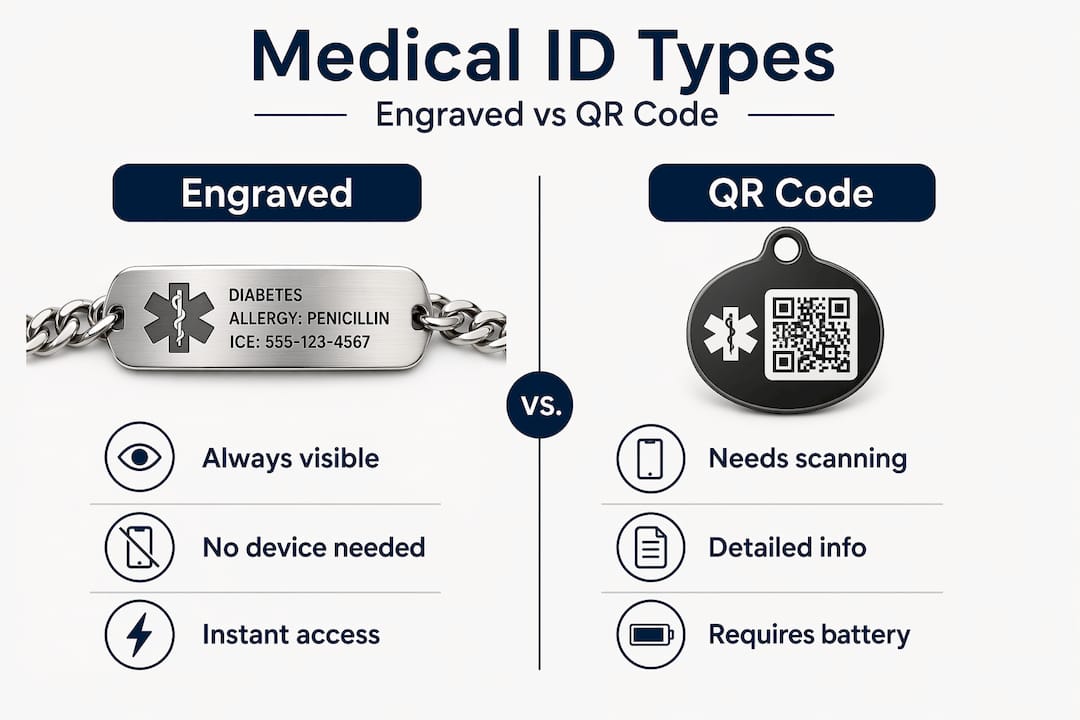
Engraved IDs remain the gold standard for emergency response precisely because of their reliability across all conditions. A QR code linked to a detailed medical profile is genuinely useful, but it requires the right person to have a working smartphone, an active data connection, and the presence of mind to scan in a chaotic moment.
That said, QR code IDs hold real advantages for people with complex or evolving conditions. Some platforms update prescription data automatically, meaning your profile always reflects your current medications without requiring a new piece of jewelry. Individuals managing conditions like chronic care patients who see multiple specialists and experience frequent medication changes can benefit enormously from this kind of updatable record.
The smartest approach for most people is a hybrid. A common strategy uses an engraved front side for immediate, critical recognition combined with a QR code or wallet card on the back for a detailed medical record. You get the instant visibility of engraving for the moment that matters most, plus the depth of a digital profile for follow-on care.
Engraved IDs are best suited for people with stable, well-defined conditions: children, elderly individuals, people with severe drug allergies, and anyone whose critical information does not change frequently. QR codes fill the gaps where engraving cannot reach.
Practical tips for keeping your medical ID accurate
Engraving is permanent. That’s both its greatest strength and its one real limitation. Before you submit your order, proof every single character. A transposed digit in a medication dosage or a misspelled drug name can cause real confusion under pressure.
Here are the most practical ways to keep your medical ID working for you long-term:
- Choose stable information to engrave. Conditions like Type 1 diabetes, severe penicillin allergy, or pacemaker presence rarely change. Engrave these. Medication dosages that change frequently are better suited to a companion wallet card.
- Order a wallet card to accompany your ID. A wallet card can hold your full medication list, physician contacts, and insurance details. It updates easily and works alongside your engraved ID without replacing it.
- Verify engraving quality before finalizing. Laser-engraved stainless steel produces sharp, high-contrast text that resists fading far better than stamped or painted lettering. Ask specifically whether your ID uses laser engraving.
- Build wearing into your routine. Put on your medical ID when you put on your watch. The best medical ID in the world does nothing if it’s sitting on your nightstand.
- Review your engraving annually. Conditions change. Medications change. Set a calendar reminder every year to confirm that what’s on your wrist still reflects your current health picture.
Many people mistakenly believe medical IDs are only necessary for rare conditions. Common situations such as blood thinner use, diabetes, and drug allergies represent exactly the scenarios where engraved IDs prevent the most errors.
My take on why this still matters in 2026
I’ve spent years looking at how people approach personal safety, and the pattern I see most often is this: people recognize the value of a medical ID after something goes wrong. Not before.
What strikes me about engraved medical IDs specifically is that we live in a world saturated with health apps, smartwatches, and connected devices, yet the most reliable safety tool during a true emergency is still a metal plate with text on it. That’s not a failure of technology. That’s a reminder that the best safety systems are the ones that cannot fail. Your phone dies. Bluetooth drops. Passcode locks a responder out. An engraved bracelet does none of those things.
I’ve also seen the mistake of over-trusting digital profiles. A QR code ID is genuinely useful for follow-on hospital care, but the chaotic first three minutes of a roadside emergency or a seizure in a grocery store are not moments anyone is stopping to scan a code. They’re checking wrists. That’s the reality on the ground.
The other thing I’d push back on is the idea that medical IDs are uncomfortable, unstylish, or intrusive. Modern engravable medical bracelets are genuinely attractive pieces of jewelry. There is no reason anymore to treat safety and style as competing priorities.
If you’ve been putting this off because it feels like a lot of work, it isn’t. Spend fifteen minutes this week identifying your three most critical medical facts. The rest is just ordering a bracelet.
— Mack
Get your custom medical ID from Divotiusa
If you’re ready to take your safety seriously without sacrificing style, Divotiusa offers a collection of custom engraved medical alert jewelry designed for people who want both quality and peace of mind. Every piece is crafted for durability and legibility, with laser engraving that holds up through daily wear and real emergencies. Whether you need a bracelet for a child with severe allergies, a necklace for an adult managing a heart condition, or a gift for a loved one with diabetes, the range covers every need. Personalized medical alerts should feel like an extension of who you are, not a clinical afterthought. Divotiusa makes that possible.
FAQ
What information should I put on my medical ID?
Include your full name, your most severe allergy or critical condition, and any life-altering medications such as warfarin or insulin. Add an emergency contact number if space allows.
Are engraved medical IDs better than QR code IDs?
Engraved IDs work instantly without any technology, making them faster and more reliable during the critical first moments of an emergency. QR code IDs are better suited for storing detailed, frequently updated medical records and can complement an engraved ID in a hybrid setup.
Who should wear a medical ID?
Anyone with a drug allergy, chronic condition, or medication that affects emergency treatment should wear one. This includes people with diabetes, epilepsy, heart conditions, blood clotting disorders, and severe allergies.
How durable are engraved medical IDs?
Laser-engraved stainless steel IDs resist fading and remain legible through years of daily wear, water exposure, and everyday physical activity. They far outlast stamped or painted alternatives.
Can I update the information on an engraved medical ID?
Engraving is permanent, so you cannot update the text on an existing piece. For information that changes frequently, use a companion wallet card or digital profile linked via QR code alongside your engraved ID.
Recommended
Shop related Divoti medical IDs: browse our custom engraved medical alert bracelets with free custom engraving. Most styles are HSA/FSA eligible.
About the author: Mack Johnson is Senior Operations Manager at Divoti Inc. in San Marcos, California, where he has led operations, marketing and customer experience since 2013. Before Divoti, he spent 12 years as a Public Health Services District Director with the Vermont Department of Health, leading regional public health operations and community health planning. He holds a bachelor’s degree from the University of Vermont. Connect with Mack on LinkedIn.