
Why Medical IDs Save Lives When You Can't Speak
Posted by Mack Johnson on May 25th 2026
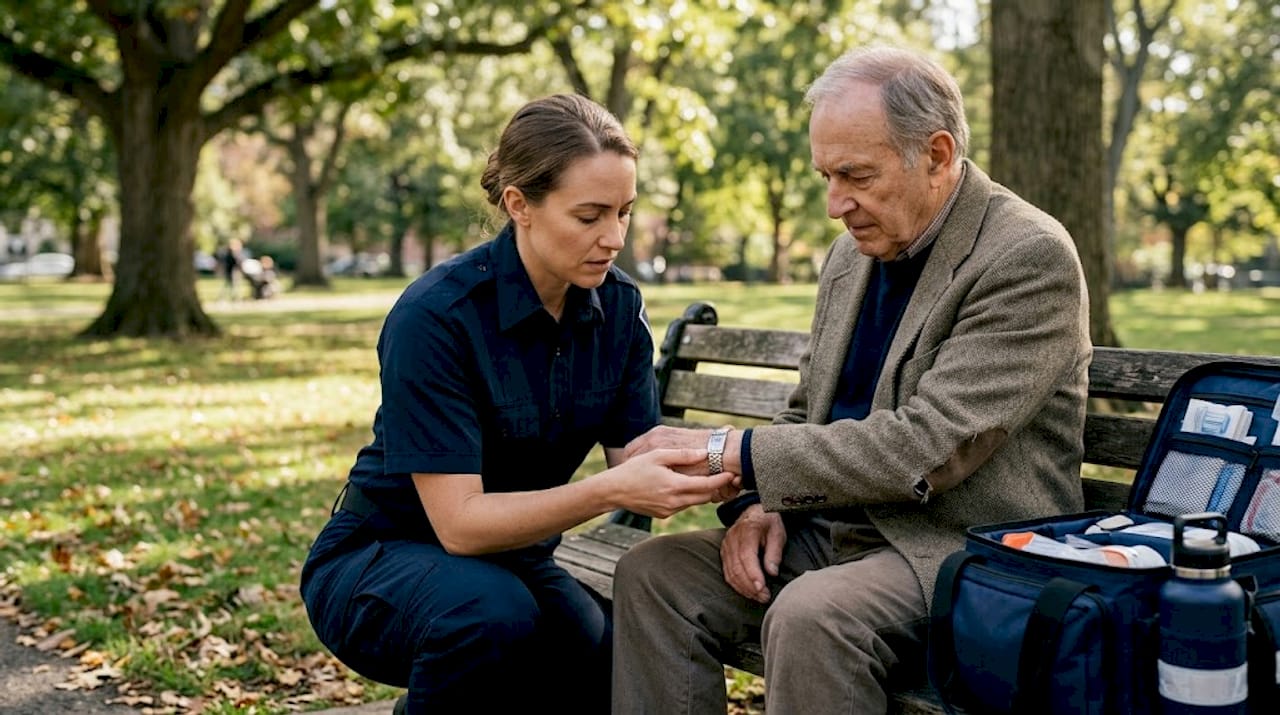
When a medical emergency strikes, you may not be able to say a word. Understanding why medical IDs save lives starts with one simple reality: unconscious patients, people mid-seizure, or those in anaphylactic shock cannot tell a paramedic about their peanut allergy, insulin dependency, or blood thinner prescription. A small engraved bracelet or pendant does the talking instead. This article breaks down exactly how medical IDs work, who needs one, and how to choose the right type so you or your child gets the right care fast.
Table of Contents
- Key takeaways
- How medical IDs work to save lives in emergencies
- Benefits of medical IDs for chronic conditions and allergies
- Choosing the right type of medical ID
- Practical tips for maximizing your medical ID’s effectiveness
- My perspective on what most people get wrong about medical IDs
- How Divotiusa helps you stay protected in style
- FAQ
Key takeaways
| Point | Details |
|---|---|
| First responders check immediately | Emergency personnel are trained to look for medical IDs within the first 30 to 60 seconds of arrival. |
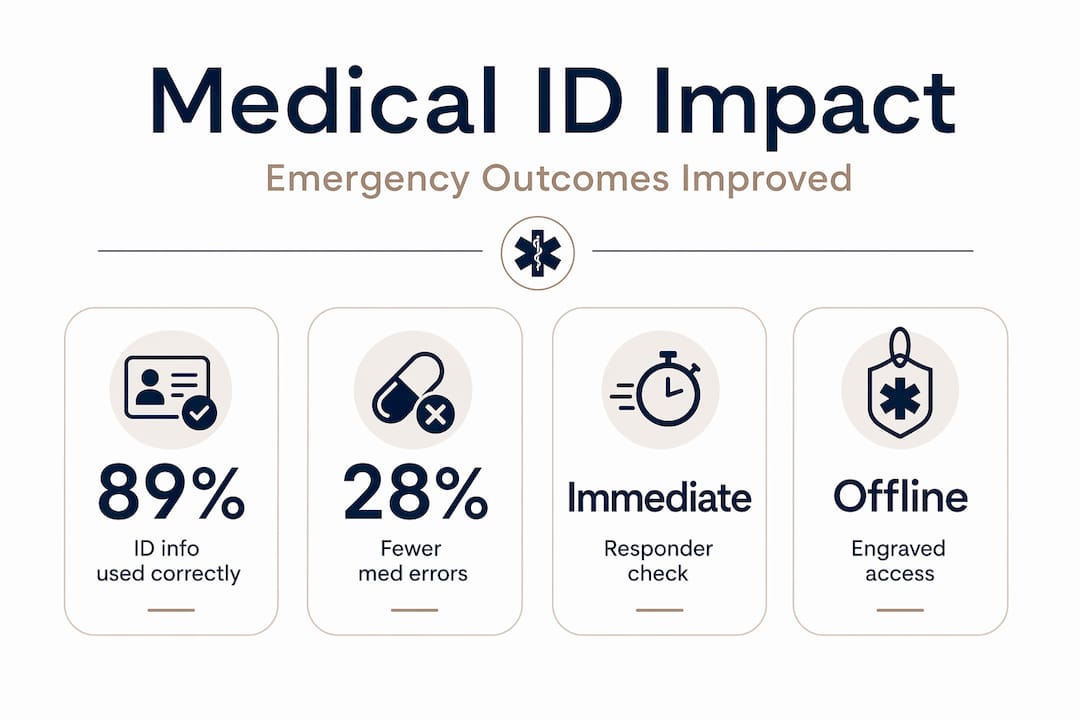
| IDs cut medication errors | Medical alert bracelets reduce medication errors in unconscious patients by up to 28%, preventing dangerous treatment mistakes. |
| Hybrid approach works best | Combining engraved bracelets with QR code profiles gives responders both instant and detailed health information. |
| Outdated info is dangerous | 35% of users never update their medical IDs after health changes, which can cause serious delays in care. |
| Anyone with a chronic condition qualifies | Diabetes, epilepsy, heart disease, severe allergies, and many other conditions all benefit from medical ID use. |
How medical IDs work to save lives in emergencies
Think of a medical ID as a fast health snapshot. The moment a first responder reaches you, they need answers fast: What harms you? What medications are you on? Who should they call? A medical ID answers all of those questions before a single test is run or a word is spoken.
Emergency responders check for medical IDs within seconds of arrival. The American College of Emergency Physicians includes this in their protocol. That means a bracelet on your wrist is not just jewelry. It is part of the formal chain of emergency care.
Here is a step-by-step look at how medical IDs work in a real emergency:
- Responder arrives and assesses the scene. Within the first 30 to 60 seconds, they visually scan wrists and necks for medical ID jewelry.
- ID is read immediately. The engraved text provides instant, offline access to your most critical health data: allergies, diagnoses, and medications.
- Treatment is adjusted. Knowing you take warfarin or carry an epinephrine auto-injector changes the entire treatment path.
- Emergency contacts are notified. Many IDs include a phone number, allowing responders to reach a family member who can fill in additional details.
- Hospital staff continues using the ID. The information follows you into the ER and guides the medical team before your records can be pulled.
Medical teams use ID information correctly in 89% of cases, avoiding the time-consuming process of tracking down records or family members. Without an ID, locating emergency contacts alone can take hours.
There is also a meaningful difference between engraved IDs and digital QR-linked profiles. Engraved IDs work without a phone, battery, or internet connection. QR-linked profiles store far more detail and can be updated after every medication change. The two approaches complement each other well, and many people now use both. More on that in the section on types of medical IDs.
Pro Tip: Place the most life-threatening condition or allergy first on your engraved ID. Responders read left to right and top to bottom. Put what matters most where their eyes land first.
Benefits of medical IDs for chronic conditions and allergies
The case for wearing a medical ID is strongest when the stakes are highest. For people managing diabetes, epilepsy, heart disease, or life-threatening allergies, the benefits of medical IDs are not theoretical. They are documented and specific.

Consider medication error rates. One in three emergency room errors involves medications. Medical alert bracelets reduce those errors in unconscious patients by up to 28% by giving clinical teams immediate context before they act. That single number represents real people who did not receive a dangerous drug interaction or an allergen-containing treatment.
Here is how medical IDs directly protect people with specific conditions:
- Diabetes: A person found unconscious may appear intoxicated. Without an ID noting diabetes, responders may miss hypoglycemia entirely. Seconds matter here.
- Epilepsy: Post-seizure patients are often confused and cannot communicate. An ID prevents unnecessary sedation or restraint by clarifying what just happened.
- Heart disease: IDs listing pacemakers or blood thinners prevent responders from using equipment or medications that could cause serious harm.
- Severe allergies: 10% of Americans carry a penicillin allergy. An ID ensures that a common antibiotic does not trigger a life-threatening reaction in the ER.
- Children with food allergies: Parents cannot always be present. A child’s medical ID communicates what no bystander may know.
There is also a broader benefit that goes beyond emergencies. Wearing a medical ID functions as a daily visual reminder for patients to stay engaged with their own health management. Clinical professionals describe it as a dual role: the ID works in the crisis and reinforces awareness before one ever occurs.
A recent 2026 program from Georgia hospitals showed how pregnancy alert bracelets with QR codes helped alert providers quickly to post-delivery risk factors, improving maternal outcomes by accelerating provider recognition. The principle applies far beyond maternity care. Faster recognition consistently leads to better outcomes, regardless of the condition.
For parents of children with allergies, medical ID use also provides an important layer of coverage during school hours, sports events, or any situation where a caregiver is not present. You cannot be everywhere. A medical ID can be.
Choosing the right type of medical ID
Not all medical IDs are built the same, and choosing the right format matters. Here is a clear comparison of the three main types available today:
| Type | Strengths | Limitations |
|---|---|---|
| Engraved bracelet or necklace | Instant visibility, no technology required, durable, works offline | Limited text space, cannot be updated easily |
| QR code or digital ID | Holds detailed records, easy to update, links to full medical profile | Requires a device and internet; may not be checked by all responders |
| Hybrid (engraved plus QR) | Best of both worlds, covers offline and digital scenarios | Slightly more complex to set up and maintain |
Engraved medical IDs provide immediate, offline recognition. Responders are trained to visually scan wrists within the first 30 to 60 seconds. That training is built around physical jewelry. A QR code on your phone, locked behind a passcode, may never be seen.
Digital QR-linked IDs fill a different gap. QR profiles hold updatable, detailed information: full medication lists, doctor contacts, surgical history, and insurance details. They are especially useful for people whose health information changes frequently, such as those undergoing chemotherapy or adjusting insulin dosages.
The most reliable approach is the hybrid combination: an engraved bracelet with your most critical alerts paired with a QR-linked wallet card or pendant holding your full profile. This covers both a power outage at the scene and a complex medical history that does not fit on a small metal plate.
When selecting a physical ID, also consider the metal type. Some individuals have sensitivities to certain alloys, particularly during prolonged wear. Reviewing medical alert metal options before purchasing helps you avoid skin reactions that could cause you to stop wearing it altogether.
Pro Tip: Review your QR profile every six months or immediately after any new diagnosis, surgery, or medication change. An outdated profile can be just as misleading as no profile at all.
Practical tips for maximizing your medical ID’s effectiveness
Owning a medical ID is a start. Using it correctly is what actually saves lives. Here is what separates a medical ID that works from one that sits in a drawer:
- Lead with urgency. Visible, concise information such as your most dangerous allergy or primary condition should appear first. Overloading your ID with text slows down recognition and defeats the purpose.
- Update after every health change. 35% of users never update their ID following medication or condition changes. QR-linked systems make this easier, but even engraved IDs can be replaced when major changes occur.
- Tell your close contacts you wear one. Family members and caregivers should know your ID is there, what it says, and why it matters. In an emergency, they can direct responders to it.
- Pair your ID with a wallet card. A small card carrying the same information adds a backup layer, especially for children or older adults. Responders often check wallets if no bracelet is visible.
- Use the recognized medical symbol. The Rod of Asclepius or the Star of Life signals to medical professionals that your ID is a medical alert, not a fashion piece. This is a subtle but meaningful distinction.
- Wear it consistently. A medical ID at home on your nightstand helps no one. Emergencies do not announce themselves. Put it on every morning alongside your watch.
If you are a parent choosing an ID for a child, make sure the engraving is clear and large enough to read quickly. Children’s IDs often get overlooked because they are small. Bright colors or bold text can help catch a responder’s eye faster.
My perspective on what most people get wrong about medical IDs
I have spent a lot of time reading through emergency response case reports, patient testimonials, and medical ID research. And the pattern I keep seeing is this: people wait too long.
Most people who would benefit from wearing a medical ID do not get one until after a frightening incident. They experience a severe allergic reaction, a seizure in public, or a diabetic emergency. Then they finally realize what could have gone differently if a responder had known their condition from the start. That delay is the most common and avoidable mistake I see.
The other misconception I encounter is the idea that a smartphone covers this need. It does not. Paper notes do not survive trauma. Smartphones sit behind lock screens. A physical bracelet is on your body, visible, and readable in seconds. There is no comparison in a genuine emergency.
What I have also found is that people underestimate how much a well-maintained ID matters. An outdated ID with the wrong medication listed is not neutral. It can actively point responders in the wrong direction. Getting the ID is step one. Keeping it current is step two, and it is equally important.
My honest recommendation: do not wait for a close call. Get the ID now, wear it every day, and review it twice a year. It is one of the smallest habits with the largest potential payoff.
— Mack
How Divotiusa helps you stay protected in style
If you have read this far, you understand what a well-crafted medical ID can do. Divotiusa takes that life-saving function and builds it into jewelry you will actually want to wear every day. Their custom engraved medical alert bracelets and necklaces are made from durable, high-quality materials and designed to display your critical health information clearly and attractively. Every piece can be personalized with your specific allergies, conditions, medications, and emergency contacts.
Divotiusa also offers options that incorporate QR code functionality, giving you the hybrid coverage that emergency experts recommend. Whether you are managing diabetes, epilepsy, a severe allergy, or another chronic condition, there is a style and format built for your life. Explore their full collection and find the medical ID that fits your health needs and your personality.
FAQ
Do medical IDs actually save lives?
Yes. Medical alert bracelets reduce medication errors in unconscious patients by up to 28%, and medical teams correctly use ID information in 89% of cases to speed up treatment and avoid harmful interventions.
What information should be on a medical ID?
Your most critical allergy or diagnosis should appear first, followed by key medications, relevant conditions, and an emergency contact number. Clarity and brevity matter more than volume of information.
Who needs a medical ID?
Anyone with a chronic condition such as diabetes, epilepsy, heart disease, or severe allergies should wear one. Parents of children with life-threatening allergies should also outfit their child with an appropriate medical ID.
What is the difference between an engraved and a QR medical ID?
Engraved IDs provide instant, offline visibility and are part of formal emergency responder protocol. QR-linked IDs store detailed, updatable medical profiles but require a device to access. Using both together offers the strongest protection.
How often should I update my medical ID?
Update your information immediately after any new diagnosis, surgery, or medication change. At minimum, review your ID every six months to make sure everything on it is still accurate.
Recommended
- Engraved Medical Bracelet Styles That Work for You - Divoti Inc.
- How to Select Medical Alert Metal Type Safely - Divoti Inc.
- Why Seniors Need Emergency Contact Jewelry - Divoti Inc.
Shop related Divoti medical IDs: browse our custom engraved medical alert bracelets with free custom engraving. Most styles are HSA/FSA eligible.
About the author: Mack Johnson is Senior Operations Manager at Divoti Inc. in San Marcos, California, where he has led operations, marketing and customer experience since 2013. Before Divoti, he spent 12 years as a Public Health Services District Director with the Vermont Department of Health, leading regional public health operations and community health planning. He holds a bachelor’s degree from the University of Vermont. Connect with Mack on LinkedIn.