
Why Seniors Need Emergency Contact Jewelry
Posted by Mack Johnson on May 22nd 2026
Why Seniors Need Emergency Contact Jewelry
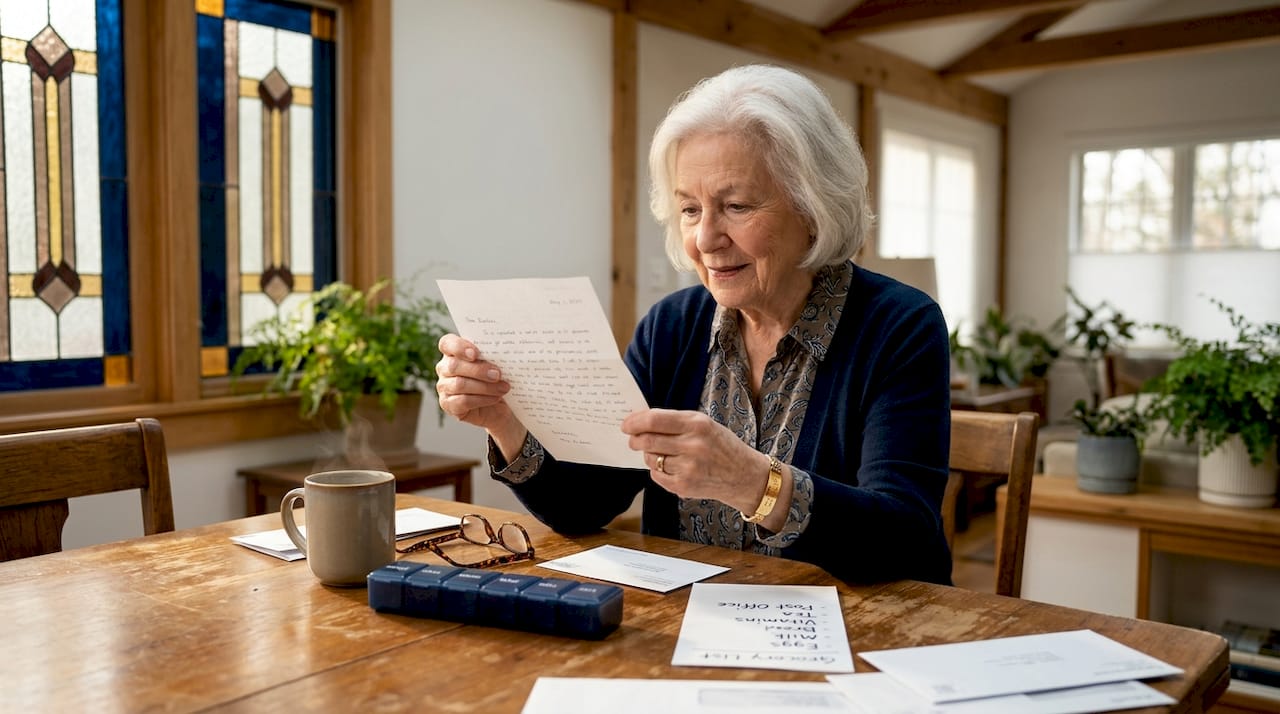
A medical emergency does not wait for the right moment. When a senior falls, loses consciousness, or has a seizure, the first few minutes determine everything. Understanding why seniors need emergency contact jewelry starts with one uncomfortable truth: responders cannot read your mind, check your phone, or search your home for a folder. They need information immediately, and the most reliable place to put it is on your body. This guide breaks down exactly what emergency contact jewelry does, why it matters more than most people realize, and how to use it correctly.
Table of Contents
- Key takeaways
- What is emergency contact jewelry for seniors
- Why emergency jewelry is critical for senior safety
- Common mistakes seniors and caregivers make
- How to choose and maintain the right emergency jewelry
- My honest take on emergency jewelry for seniors
- Find the right emergency jewelry for your loved one
- FAQ
Key takeaways
| Point | Details |
|---|---|
| Wearable info is fastest | EMTs prioritize visible jewelry over wallet cards or phones during emergencies. |
| Two types work together | Passive engraved IDs and active monitored devices offer layered protection. |
| Outdated contacts are dangerous | Emergency contact info should be reviewed every 6 to 12 months. |
| Engrave only what matters most | Prioritize critical conditions and one primary contact to keep info readable. |
| Consistency is the real challenge | Wearing jewelry every day and updating it regularly is what actually saves lives. |
What is emergency contact jewelry for seniors
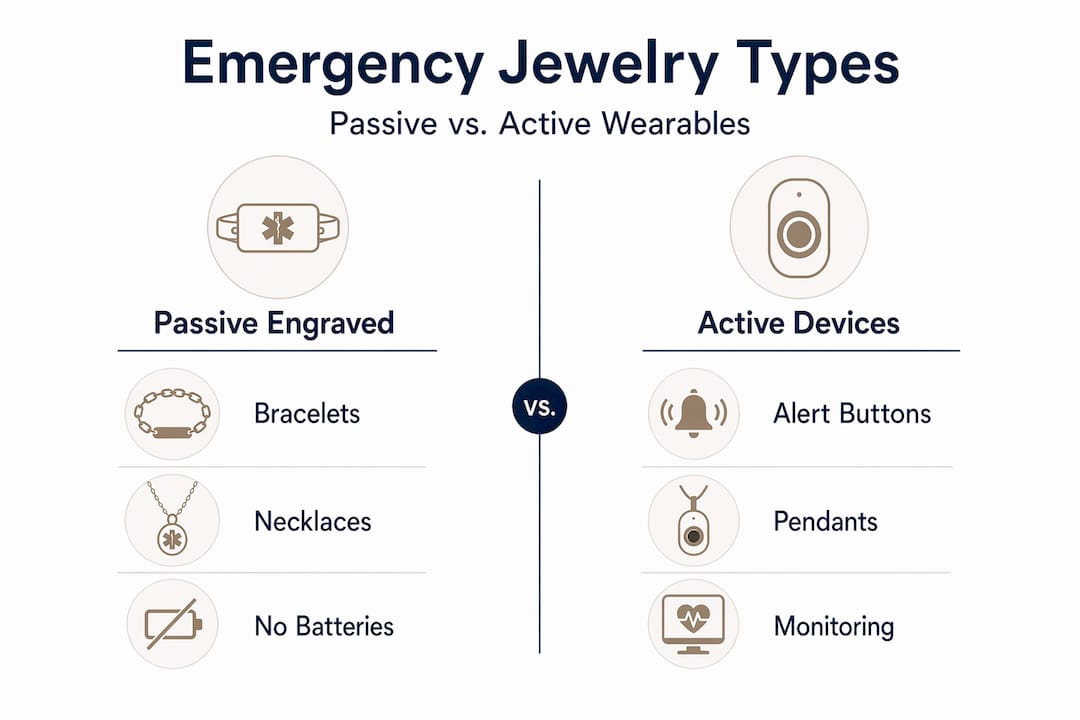
Emergency contact jewelry is any wearable item that carries medical or contact information for use during a health crisis. For seniors, it falls into two main categories, and understanding the difference helps you make a smarter choice.
Passive engraved jewelry is the most common form. Think bracelets, necklaces, and anklets with engraved text showing a person’s name, medical conditions, allergies, medications, and a primary emergency contact number. No batteries. No subscription. No app required. A paramedic can read it in seconds, even if the wearer is unconscious. EMTs prefer jewelry over wallet cards because it is immediately visible and does not require searching through belongings during chaotic moments.
Active monitored alert devices work differently. These are wearable buttons or pendants connected to a monitoring center or preassigned contacts. When triggered, systems alert response teams or family members directly. Some include two-way voice communication so the wearer can speak with an operator. Others add fall detection, GPS tracking, and medication reminders.
The smartest approach combines both. Passive jewelry covers you when you cannot press a button. Active devices cover you when you can. Together, both layers protect against the widest range of emergencies.
Here is a quick comparison to help you evaluate your options:
| Feature | Passive engraved jewelry | Active monitored device |
|---|---|---|
| Requires power | No | Yes |
| Monthly cost | None after purchase | Starting around $19/month |
| Works if wearer is unconscious | Yes | Depends on fall detection |
| Two-way communication | No | Yes (select models) |
| Visible to any responder | Yes | Only if responder knows the device |
- Passive jewelry works for seniors who are active, independent, and want a discreet option
- Active devices work best for seniors living alone or with higher fall risk
- Combination use is recommended for seniors with serious chronic conditions
- Style and comfort matter. A piece that feels uncomfortable will not get worn
Pro Tip: Choose a bracelet or necklace style that fits comfortably enough to wear 24 hours a day. If it comes off at night, it is not there when you need it most.
Why emergency jewelry is critical for senior safety
Falls are not a minor concern. They are the leading injury cause among adults 65 and older, sending hundreds of thousands to emergency rooms every year. Speed of response directly affects outcomes. The faster a responder knows what they are dealing with, the faster they can act correctly.
Here is where most people get the logic wrong. They assume a phone is good enough. It is not.
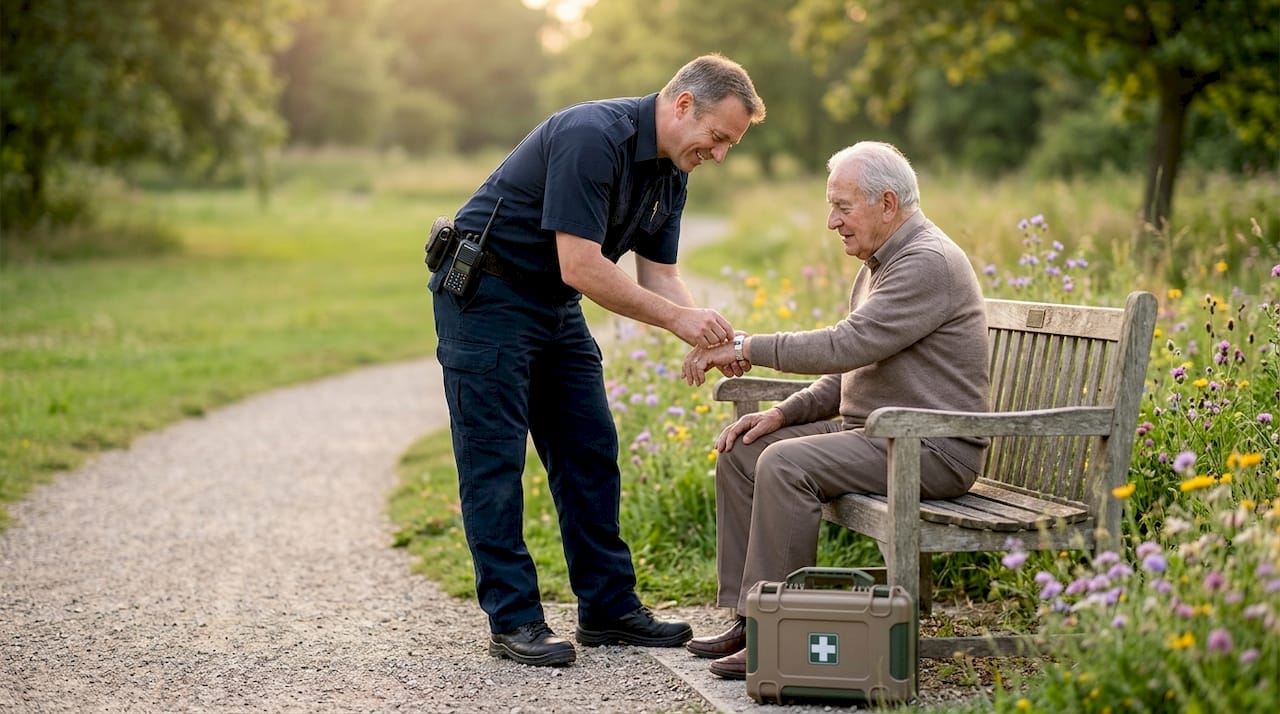
“First responders prioritize immediate visible information during critical care moments. Phones are rarely checked, and there is no universal training or practice that directs EMTs to search a patient’s phone for medical details.” Where to Keep Medical Information for Emergencies
Think about what actually happens at an emergency scene. Paramedics are focused on stabilizing the patient. They are checking airways, pulse, and responsiveness. They are not unlocking a stranger’s phone or searching a purse. Wearable information is the only information that gets seen in those first critical minutes.
There are several specific reasons why emergency jewelry for seniors makes such a difference:
- Unconscious patients cannot speak. A senior with a blood thinner allergy who cannot communicate that fact is at serious risk if a responder administers the wrong treatment.
- Cognitive conditions complicate communication. Seniors with dementia or Alzheimer’s may not be able to accurately describe their conditions, medications, or who to call.
- Accurate contacts reduce delays. When a responder can call a family member immediately, that family member can provide medical history, authorize treatment, and get to the hospital faster.
- Allergies and medications can be life-or-death details. Knowing a patient is allergic to penicillin or takes blood thinners changes the treatment plan immediately.
- Emergency chaos is real. Bystanders panic. Responders move fast. Wearable info cuts through the noise.
The importance of contact jewelry is not theoretical. It is the difference between a responder treating a senior correctly from the start versus making educated guesses under pressure.
Common mistakes seniors and caregivers make
Knowing why emergency jewelry matters is only half the picture. The other half is understanding where people go wrong, because the most common mistakes are also the most avoidable.
-
Keeping outdated emergency contacts. Life changes. People move. Phone numbers change. Family situations shift. Emergency contacts need updating every 6 to 12 months, especially after retirement when social networks and living situations often change significantly. An engraved number that no longer works is worse than no number at all because it wastes precious time.
-
Assuming passive jewelry alone is enough. Engraved jewelry tells responders what they need to know. It does not call for help. Seniors living alone need an active device as well, because passive jewelry alone cannot initiate contact with emergency services or family.
-
Not wearing the jewelry consistently. This is the biggest mistake. A bracelet sitting on the nightstand during a morning fall does nothing. Wearing it must become as automatic as wearing a watch.
-
Engraving too much information. It seems logical to include everything. In practice, too much text becomes unreadable in an emergency. Responders need to absorb information in seconds, not minutes.
-
Believing responders check tattoos or phones. This misconception is surprisingly common. There is no standard protocol directing EMTs to check phones or medical tattoos. Responders check visible jewelry first, every time.
Pro Tip: Set a calendar reminder every six months to review the information on your emergency jewelry. Treat it like a smoke detector test. It only takes five minutes and it could save your life.
How to choose and maintain the right emergency jewelry
Selecting the right piece is not complicated, but it does require some thought. Here is how to approach it practically.
What to engrave
Prioritize key conditions and one primary emergency contact rather than trying to list every medication or diagnosis. The goal is clarity under pressure.
Focus on:
- Your most critical medical condition (diabetes, heart condition, epilepsy, blood thinners)
- Any life-threatening allergy (penicillin, latex, shellfish)
- One reliable emergency contact with a current phone number
- The word “MEDICAL ALERT” or a recognized symbol so responders know to look
How to choose the right style
Comfort drives consistency. A piece that feels good gets worn every day. Consider these factors:
- Material: Stainless steel, sterling silver, and silicone are durable and hypoallergenic options
- Clasp and fit: Adjustable closures work better for seniors with arthritis or limited hand dexterity
- Size: Larger engravable surface means more readable text
- Style: Choosing something that looks good increases the likelihood of daily wear
Keeping information current
Update contact info after any major life event. Moving, a change in primary physician, a new diagnosis, or a family member changing their phone number are all triggers for a review. Some jewelry providers offer re-engraving services. Others make it easy to order a replacement piece at low cost.
| Life event | Action needed |
|---|---|
| Family member changes phone number | Update emergency contact on jewelry |
| New serious diagnosis | Add condition to engraving |
| Change in primary medication | Review and update if allergy-relevant |
| Move to new city or care facility | Update contact and physician info |
| Annual review (every 6 to 12 months) | Verify all info is still accurate |
My honest take on emergency jewelry for seniors
I have spent years talking with caregivers and seniors about safety tools, and one pattern keeps coming up. People invest in the right tools and then undermine them through inconsistency.
I have seen seniors who own beautiful, well-engraved medical ID bracelets that spend most of their time in a drawer. I have talked with caregivers who set up an active alert system and never updated the emergency contact after a family member got a new number. These are not careless people. They are busy people who treated setup as the finish line instead of the starting point.
My honest view is this: the jewelry itself is the easy part. The discipline of wearing it daily and reviewing it regularly is where most people fall short. A $30 engraved bracelet worn every single day is more valuable than a $200 monitored device that gets taken off at night.
I also push back on the idea that a smartphone solves this problem. I understand why people think that. Phones are always nearby. But in my experience, the chaos of a real emergency is nothing like the calm scenario people imagine when they say “just check my phone.” Responders are moving fast. They are not scrolling through contacts.
The other thing I want caregivers to hear: do not make this decision for your loved one without them. Seniors who choose their own jewelry, who pick a style they actually like, wear it far more consistently than those who receive a generic medical ID and feel no connection to it. Autonomy matters. Style matters. Give them options.
— Ronald
Find the right emergency jewelry for your loved one
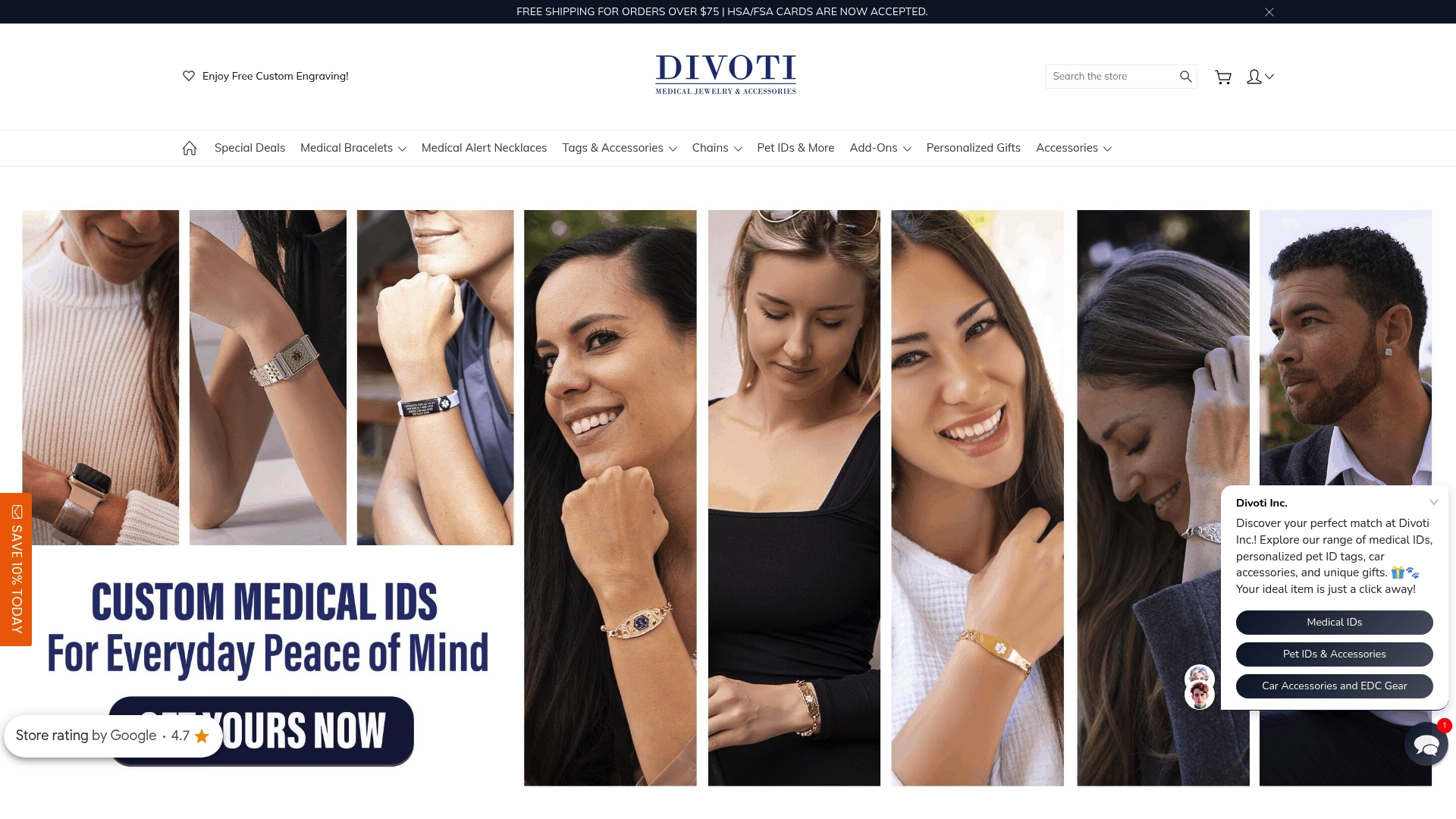
At Divotiusa, the focus has always been on medical alert jewelry that people actually want to wear. That means pieces that look good, feel comfortable, and carry the information that matters most. A medical ID should not feel like a hospital bracelet. It should feel like something you choose.
Divotiusa offers a full range of engraved medical alert jewelry including bracelets, necklaces, and cuffs designed for seniors who want both safety and style. Each piece is crafted for durability and readability, with enough surface area to include your most critical health details clearly. Whether you are shopping for yourself or a parent, you will find options that balance function with personal taste. Explore the full collection and take the first step toward real, wearable peace of mind.
FAQ
What is emergency contact jewelry?
Emergency contact jewelry is a wearable item, typically a bracelet or necklace, engraved with critical medical information and emergency contact details for use by first responders during a health crisis.
Why do EMTs check jewelry instead of phones?
There is no universal training directing EMTs to search a patient’s phone during emergencies. Responders prioritize visible jewelry because it is immediately accessible without unlocking a device or searching belongings.
How often should emergency contact jewelry be updated?
Emergency contact information should be reviewed every 6 to 12 months and after any major life event such as a move, a new diagnosis, or a family member changing their phone number.
Do seniors need both passive and active emergency devices?
For seniors living alone or with high fall risk, combining passive engraved jewelry with an active monitored alert device offers the strongest protection. Both types work together to cover scenarios where the wearer may or may not be able to trigger an alert.
What information should be engraved on a medical ID?
Focus on your most critical medical condition, any life-threatening allergy, and one reliable emergency contact number. Too much engraved text reduces readability and slows down responders when time matters most.
Recommended
Shop related Divoti medical IDs: browse our senior medical alert bracelets and necklaces with free custom engraving. Most styles are HSA/FSA eligible.