

How to Select Medical Alert Metal Type Safely
Posted by Mack Johnson on May 22nd 2026
How to Select Medical Alert Metal Type Safely

When you need to select medical alert metal type, the stakes are higher than a typical jewelry purchase. The metal you choose affects whether your skin reacts, whether the engraving stays legible after years of daily wear, and whether an emergency responder can read your medical information in seconds. This guide walks you through every major metal option, the allergy science behind nickel safety, and a clear process for choosing the right material for your body, your lifestyle, and your peace of mind.
Table of Contents
- Key takeaways
- How to select medical alert metal type: an overview of your options
- Understanding nickel allergies and safe metal choices
- Mixed materials and design combinations worth knowing
- Steps to choose the best metal for your medical alert
- Maintaining your medical alert jewelry over time
- My take on navigating medical alert metal choices
- Find the right medical alert jewelry at Divotiusa
- FAQ
Key takeaways
| Point | Details |
|---|---|
| Metal type affects allergy risk | Titanium and niobium are naturally nickel-free and safest for sensitive skin. |
| Nickel release matters more than content | A piece can contain nickel atoms and still be safe if release stays under regulatory limits. |
| Always request test documentation | Ask manufacturers for nickel-release test results, not just alloy grade claims. |
| Mixed materials add comfort | Leather and sterling silver combinations reduce weight while keeping engravings clearly visible. |
| Regular inspection protects you | Check engravings periodically so emergency responders can always read your medical details. |
How to select medical alert metal type: an overview of your options
Choosing the right metal is not just about looks. The types of medical alert metals available today range from budget-friendly stainless steel to premium titanium, and each carries a different profile for durability, skin compatibility, and long-term wearability. Here is how the main options compare.
| Metal | Durability | Hypoallergenic | Style Range | Cost |
|---|---|---|---|---|
| 316L Stainless Steel | Very high | Moderate (with PVD coat) | Wide | Low |
| Titanium | Very high | Excellent | Moderate | Medium |
| Niobium | High | Excellent | Limited | Medium |
| Sterling Silver (925) | Moderate | Good if nickel-free | Wide | Medium |
| Platinum | Very high | Excellent | Narrow | High |
| Palladium alloy | High | Good if nickel-free | Moderate | High |
316L stainless steel is the most common medical alert bracelet material. It resists corrosion well, holds engraving cleanly, and costs less than most alternatives. 316L stainless steel with PVD coating offers strong corrosion resistance and an inert surface that reduces nickel exposure, making it a reasonable choice for people with mild sensitivities.
Titanium is where things get genuinely impressive. It is as strong as steel at roughly half the weight, which matters a lot when you wear something every single day. Titanium and niobium are naturally nickel-free metals with excellent biocompatibility, widely recommended for sensitive skin and hypoallergenic wear. If you have a confirmed nickel allergy, titanium is one of the safest choices you can make.
Niobium is less well known but equally safe for sensitive skin. It shares titanium’s hypoallergenic profile and is often used in body jewelry for exactly that reason. The style range is narrower, but it is a solid option if you prioritize skin safety over aesthetics.
Sterling silver (925) brings classic elegance to medical alert jewelry options. Certified 925 sterling silver and palladium-containing white gold alloys can be nickel-free if formulated correctly, making them suitable for premium pieces without allergy risk. The trade-off is that silver scratches more easily than steel or titanium and requires more maintenance to keep engravings sharp.
Platinum and palladium alloys sit at the premium end. Both resist tarnish, hold fine detail well, and are generally safe for sensitive skin when properly formulated. The cost puts them out of reach for many buyers, but for someone who wants a piece that lasts decades without compromise, they are worth considering.
Understanding nickel allergies and safe metal choices
Nickel allergy is one of the most common causes of contact dermatitis. Symptoms include redness, itching, and blistering at the point of skin contact, which is the last thing you want from a piece of jewelry you wear around the clock.
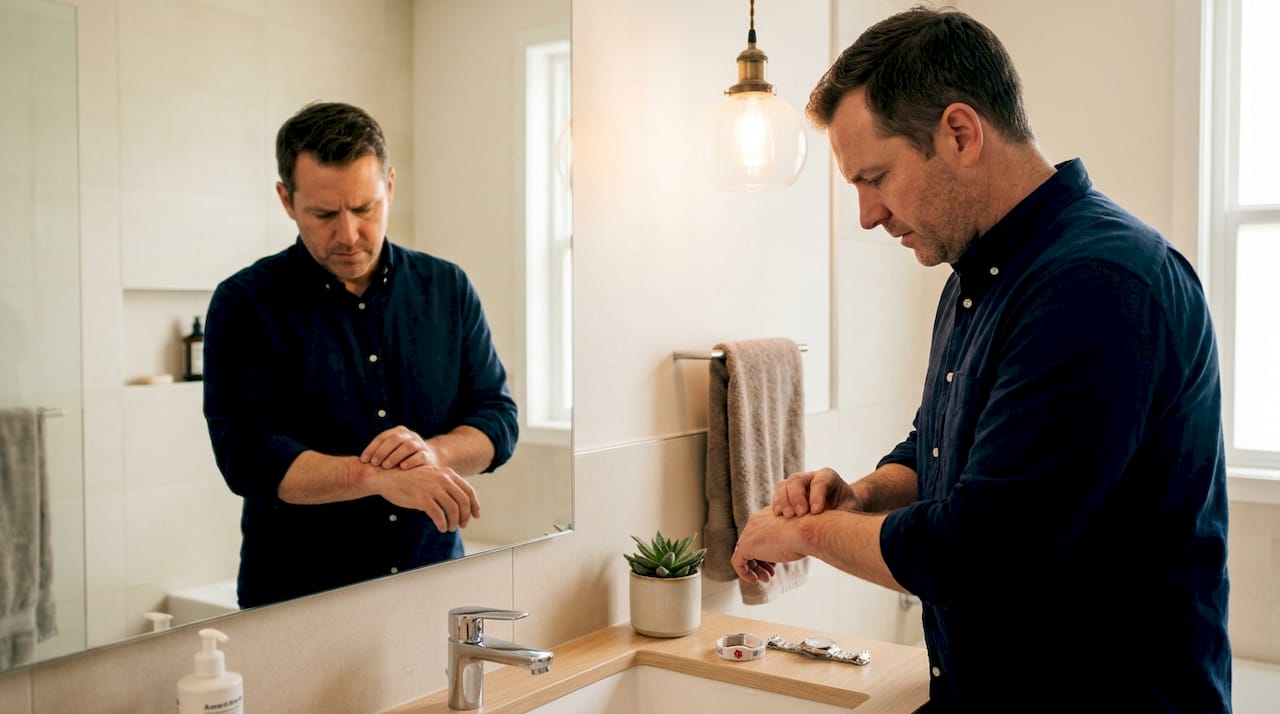
Here is the part most buyers miss: the risk is not simply about whether a metal contains nickel. Nickel safety depends on nickel release in skin contact conditions, not just nominal alloy content. A piece can contain nickel atoms and still be completely safe if the rate at which nickel migrates to your skin stays below regulated thresholds.
Under EN 1811 test standards, nickel-release limits are set at 0.5 µg/cm²/week for prolonged skin contact items and 0.2 µg/cm²/week for piercing posts. These numbers give you a concrete benchmark to ask about when evaluating any medical alert bracelet materials.
What this means practically:
- A bracelet labeled “stainless steel” is not automatically safe. The alloy grade and any surface coating determine actual nickel release.
- A bracelet labeled “nickel-free” is not automatically safe either, unless the manufacturer has tested the finished product.
- Plated pieces can expose underlying nickel-containing metals once the plating wears through, which happens faster with daily wear.
- Sweat, sunscreen, and cleaning products accelerate nickel release, so a piece that tested fine in a lab may behave differently on your wrist.
Pro Tip: Ask your jewelry supplier specifically for EN 1811 nickel-release test results on the finished piece, not just the alloy specification sheet. These are two different documents, and only the finished-piece test tells you what is actually touching your skin.
Mixed materials and design combinations worth knowing
Not every medical alert jewelry option needs to be a solid metal band. Mixed-material designs have grown significantly in quality and variety, and they solve real problems that pure metal pieces do not always address.
Sterling silver beads with deep laser engraving on a 5mm thick leather band give paramedics fast visual access to your information while keeping the piece light and flexible on your wrist. Leather sits differently against skin than metal, which can be a genuine comfort advantage for people who find rigid bands irritating during sleep or exercise.
The benefits of mixed-material medical alert bracelets go beyond comfort:
- Weight reduction. Leather, silicone, and fabric components reduce overall bracelet weight without sacrificing the metal engraving plate that responders look for.
- Flexibility. A soft band moves with your wrist rather than against it, reducing the pressure points that cause some people to remove their medical ID entirely.
- Style range. Mixed materials open up color, texture, and design options that solid metal cannot match, making it more likely you will actually wear the piece every day.
- Maintained visibility. The metal engraving component stays prominent even on a mixed-material design, so emergency readability is not compromised.
Soft leather bands paired with silver medical beads enhance wearability while retaining the visibility that makes a medical ID useful in a crisis. The key is making sure the engraved metal element is positioned on the outside of the wrist where responders will see it first.
Steps to choose the best metal for your medical alert
Getting this right takes a few deliberate steps. Here is a process that works.
1. Identify your skin sensitivity history. Think back to any jewelry reactions you have had. Redness under a watch band, itching from earrings, or a rash from a belt buckle all point toward nickel sensitivity. If you have had a formal allergy test, check whether nickel was flagged. This tells you immediately whether you need to prioritize titanium, niobium, or verified nickel-free sterling silver.
2. Research material specifications before you buy. Do not rely on product descriptions alone. Look for the specific alloy grade (316L rather than generic “stainless steel”), whether a PVD or other protective coating is applied, and whether the manufacturer publishes nickel-release test documentation for finished products. Regulatory safety depends on tested nickel migration under skin contact, not just an alloy grade claim.
3. Match the metal to your lifestyle. If you swim regularly, work with your hands, or exercise daily, durability and corrosion resistance matter more. Stainless steel and titanium handle physical stress better than sterling silver. If you prioritize aesthetics and wear the piece mostly in low-impact settings, sterling silver or a palladium alloy gives you more design options.
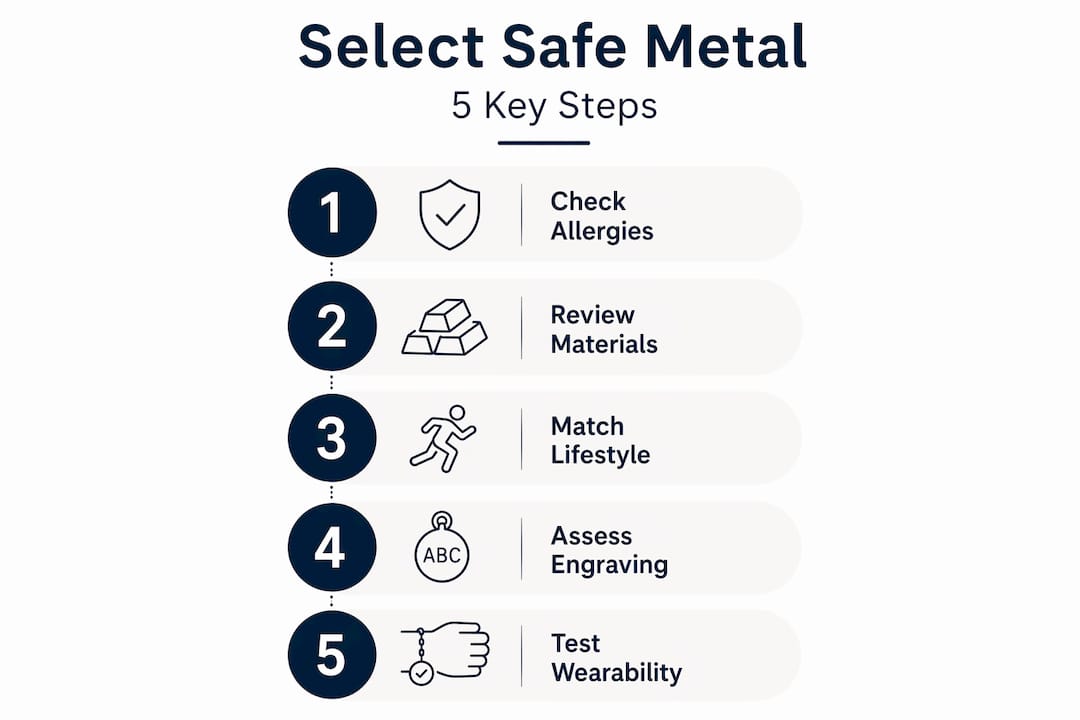
4. Consider the engraving depth and legibility. Harder metals like titanium and stainless steel hold laser engraving longer without wearing smooth. Softer metals like sterling silver can show wear on engraved surfaces over time. For a medical ID, legibility is a safety issue, not just an aesthetic one.
5. Perform a patch test before committing to daily wear. Wear the new piece for a few hours on a small area of skin before wearing it full time. Watch for redness, warmth, or itching at the contact point. This simple step can save you from weeks of skin irritation.
Pro Tip: If you are buying for a child or someone with cognitive impairments who cannot report discomfort, go straight to titanium or niobium. The cost difference is worth the certainty.
Maintaining your medical alert jewelry over time
The metal you choose only protects you if the piece stays in good condition. A scratched or faded engraving is not just cosmetic damage. It is a safety gap.
Keep these maintenance practices in mind:
- Clean regularly with mild soap and warm water. Avoid bleach, ammonia-based cleaners, and abrasive cloths, which can damage surface coatings and accelerate wear on engraved text.
- Remove before swimming in chlorinated pools or saltwater. Even corrosion-resistant metals can degrade faster with prolonged chemical exposure.
- Inspect engravings every few months. Run your fingertip across the text. If you cannot feel the depth of the letters clearly, an emergency responder may struggle to read them under stress.
- Watch for discoloration or flaking on plated pieces. These are signs the protective layer is wearing through, which increases both nickel exposure risk and engraving wear.
- Check manufacturer warranty terms before you buy. Some makers offer re-engraving services or replacement guarantees. Knowing your options before a problem occurs saves time when it matters.
Replacing a worn piece is not a failure. It is responsible maintenance of a life-safety tool.
My take on navigating medical alert metal choices
I have worked with enough allergy-sensitive clients to know that the biggest mistake people make is trusting marketing language over documented proof. A bracelet described as “hypoallergenic” or “nickel-free” on a product page means nothing without a test certificate to back it up. I have seen people react to pieces that were labeled safe, simply because the manufacturer tested the raw alloy rather than the finished product with its coating and hardware.
My honest advice: treat the metal selection process the way you would treat buying a car seat. You would not accept “probably safe” for something that protects a life. Ask for the paperwork. If a supplier cannot or will not provide nickel-release test results for the finished piece, walk away.
The other thing I have learned is that the best metal for medical alert use is the one you will actually wear every day. A titanium bracelet sitting in a drawer because it feels too industrial does nothing for you in an emergency. Aesthetics matter because they drive compliance. Choose a metal and design you genuinely like, then verify the safety specs. That order works.
— Ronald
Find the right medical alert jewelry at Divotiusa
You have done the research. Now it is time to put it to work.
Divotiusa offers a curated selection of medical alert bracelets, cuffs, and necklaces built from durable, skin-safe materials with deep laser engraving that stays legible through years of daily wear. Whether you need a titanium band for sensitive skin, a sterling silver option for classic style, or a mixed-material design for everyday comfort, Divotiusa’s collection covers the full range. Every piece is designed so that emergency responders can read your critical information at a glance. Browse the full collection, check material specifications, and find the piece that fits both your safety needs and your personal style.
FAQ
What is the safest metal for a medical alert bracelet?
Titanium and niobium are the safest choices for sensitive skin because they are naturally nickel-free with excellent biocompatibility, making them ideal for prolonged daily wear.
Does “nickel-free” on a label guarantee no allergic reaction?
Not necessarily. A piece must have tested nickel-release results below regulatory limits on the finished product, not just an alloy-grade claim, to be reliably safe for nickel-sensitive wearers.
How often should I replace my medical alert jewelry?
Inspect your piece every few months. Replace it when engraving becomes difficult to read by touch or sight, or when surface coatings show visible wear or flaking.
Can I wear a medical alert bracelet in the shower or pool?
Titanium and 316L stainless steel handle water well, but prolonged exposure to chlorinated or saltwater can accelerate wear on coatings and engravings. Remove the piece before swimming when possible.
What information should be engraved on a medical alert bracelet?
Include your primary medical condition, any critical drug allergies, and an emergency contact number. Keep it concise so responders can read it in seconds under pressure.
Recommended
Shop related Divoti medical IDs: browse our custom engraved medical alert bracelets with free custom engraving. Most styles are HSA/FSA eligible.