

Custom Medical ID Engraving Options for Every Need
Posted by Mack Johnson on May 29th 2026
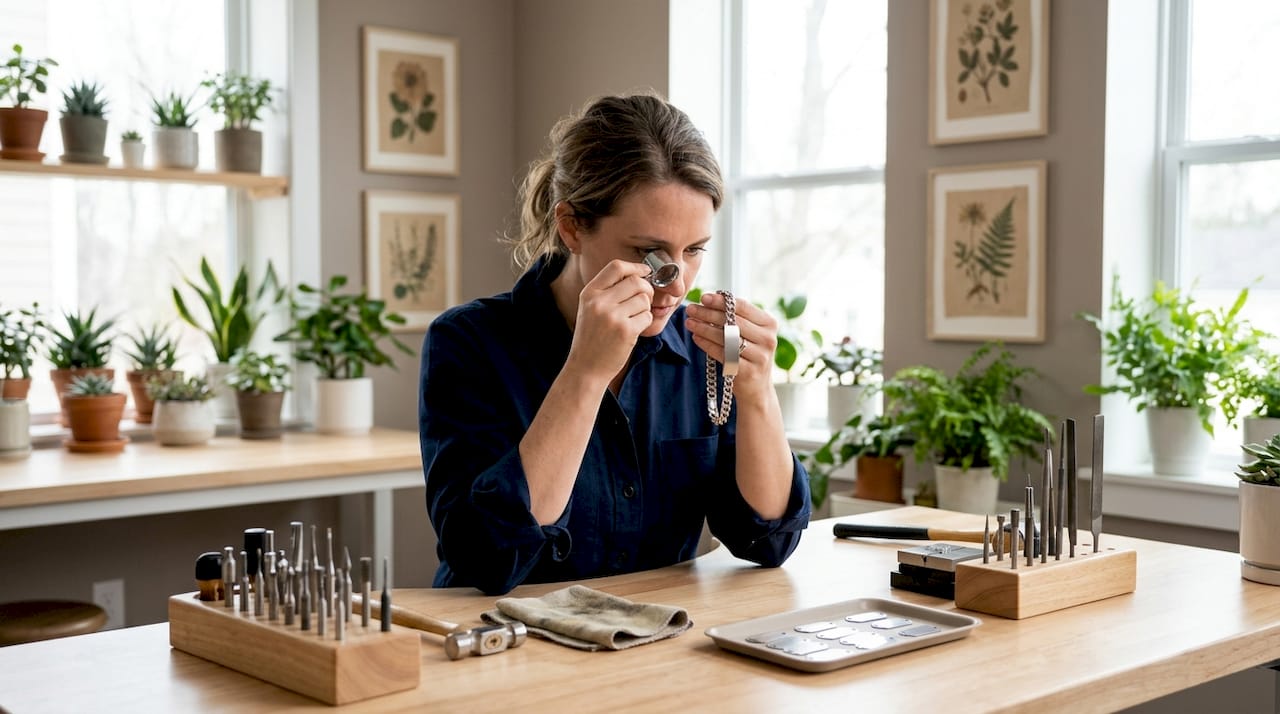
When you or your child has a serious health condition, a medical ID is one of the most practical safety tools you can own. But choosing the right custom medical id engraving options is harder than it looks. The method, depth, layout, and material all affect whether an emergency responder can read your information clearly in seconds. Engraved medical IDs provide instant recognition in emergencies even when technology fails. This guide breaks down every major engraving approach, what each one does well, and how to match your choice to your actual needs.
Table of Contents
- Key takeaways
- 1. What to look for in custom medical ID engraving options
- 2. Laser engraving: precision and durability in one process
- 3. Deep engraving and annealing: industrial-grade durability explained
- 4. Customization and style: colors, fonts, dual-sided engraving, and QR codes
- 5. Comparing engraving options: which one fits your situation
- My take on engraving quality and why most people underestimate it
- Get a stylish, durable engraved medical ID from Divotiusa
- FAQ
Key takeaways
| Point | Details |
|---|---|
| Engraving method matters | The technique you choose affects readability, durability, and how long your ID stays legible under daily wear. |
| Less text reads faster | Emergency responders read concise, prioritized information faster, so keep engraved text focused on critical details. |
| Dual-sided engraving expands capacity | Using both sides of a medical ID lets you cover conditions, allergies, medications, and emergency contacts without crowding. |
| QR codes add a second layer | Pairing front engraving with a back QR code gives first responders immediate visible info plus detailed updateable records. |
| Style drives consistent wear | Personalized, attractive medical IDs are worn more consistently, which directly improves safety outcomes. |
1. What to look for in custom medical ID engraving options
Not every engraving method works for every person or every condition. Before you pick a style, there are a few criteria worth evaluating.
Durability under daily wear. Your medical ID goes everywhere you go. It gets wet, gets bumped, and may need to be cleaned or even sterilized. Deeper laser marking and annealing prevent fading and surface degradation over time, making technique a real safety factor, not just a cosmetic one.
Information capacity. Some engraving methods allow only a few lines. Others support both sides, smaller fonts, or supplemental QR codes. Match the method to how much information you actually need to communicate.
Readability at a glance. Emergency responders work fast. Too much engraved text reduces readability and can cause critical info to be missed. Prioritize the most urgent details on the front.
- Visibility: High-contrast engravings on light or polished surfaces read faster than low-contrast marks on dark finishes.
- Font clarity: Simple, sans-serif fonts at readable sizes outperform decorative scripts in emergencies.
- Material compatibility: Stainless steel and titanium accept deep laser marks well. Softer metals may not hold fine detail as long.
- Hypoallergenic factors: If you have metal sensitivities, check that the base material is skin-safe before worrying about engraving style. The Divotiusa guide on selecting medical alert metal covers this in practical detail.
Pro Tip: Ask your engraver for a proof before final production. Seeing the layout at actual size reveals readability problems that look fine on a screen.
2. Laser engraving: precision and durability in one process
Laser engraving is the most widely used method for personalized medical IDs today. A focused beam removes or alters the surface of the metal, creating a permanent, precise mark without physical contact.
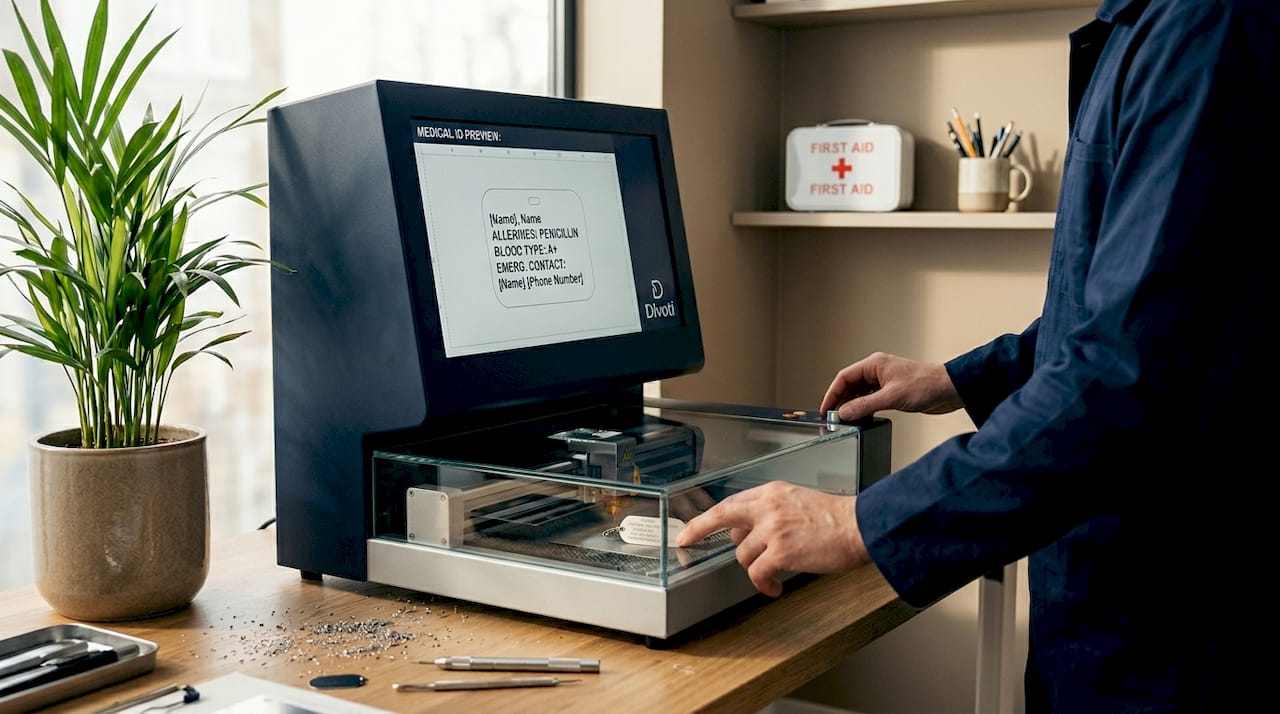
The result is a clean, deep impression that holds up well over years of daily wear. On stainless steel and titanium, laser engraving resists wear, sterilization, and corrosion, which makes it suitable for people who swim, exercise, or work in environments where jewelry takes a beating.
Here is what laser engraving does particularly well:
- Fine detail reproduction, including small fonts and line art
- Consistent depth across the entire mark
- No added chemicals or coatings that could degrade
- Compatibility with curved surfaces and bracelet plates
The one real limitation is information density. Fitting many lines of text onto a small plate still requires thoughtful layout. More conditions, more medications, and more contacts require more space. That is where dual-sided engraving or QR codes become valuable additions, which the sections below address directly.
Pro Tip: Laser-engraved stainless steel medical IDs hold their legibility significantly longer than chemically etched alternatives. If longevity is a priority, ask specifically for laser marking, not just “engraving.”
3. Deep engraving and annealing: industrial-grade durability explained
Surface engraving removes a thin layer of metal. Deep engraving goes further, creating marks that sit well below the surface of the material. Annealing works differently: it uses heat from a laser to change the color of the metal at a molecular level without removing any material at all.
That distinction matters for medical IDs. Annealing on titanium or stainless steel creates high-contrast marks without surface damage, which means the metal’s corrosion resistance stays fully intact. There is no exposed layer to rust, chip, or fade. The mark becomes part of the material itself.
| Method | Surface impact | Corrosion resistance | Best for |
|---|---|---|---|
| Surface laser engraving | Moderate removal | Good | Most everyday medical IDs |
| Deep laser engraving | Deep removal | Very good | High-wear use, active lifestyles |
| Laser annealing | None (color change only) | Excellent | Medical-grade, long-term wear |
Medical device-grade engraving requires process validation under FDA and ISO standards. For a consumer medical ID, you may not need that level of certification. But the principle still applies: the more rigorous the process, the longer your engraving stays legible and safe.
For parents choosing a medical ID for a child with severe allergies, this matters especially. A child’s bracelet will go through years of washing, playground wear, and growth spurts requiring resizing. Starting with a deeply marked or annealed ID reduces the chance that the engraving becomes unreadable just when it is most needed.
4. Customization and style: colors, fonts, dual-sided engraving, and QR codes
A medical ID you actually enjoy wearing is one you will keep on consistently. Stylish customization options increase wearing compliance, which directly improves your safety. That is not a minor point. An elegant bracelet sitting in a drawer does nothing in an emergency.
Here is where the real variety comes in:
- Single vs. dual-sided engraving: The front typically holds your primary condition, allergy, or medication. The back is ideal for emergency contacts, secondary diagnoses, or doctor names. For anyone managing multiple conditions, dual-sided engraving is worth the small added cost.
- Font and layout: Simple block fonts at 8 to 10 point size read well at arm’s length. Avoid decorative scripts for critical medical text.
- Color contrast: Color background and text contrast improve visibility under varied lighting, which is especially relevant for IDs worn in outdoor or low-light environments.
- QR code integration: A QR code on the back of a traditional engraved tag links to an online profile with detailed, updateable information. QR medical IDs offer updateable profiles for complex or frequently changing medical information, reducing the need for a new engraving every time something changes.
| Feature | Benefit | Best used for |
|---|---|---|
| Dual-sided engraving | Doubles information capacity | Multiple conditions, complex histories |
| QR code on reverse | Updateable, detailed digital profile | Changing medications, multiple contacts |
| Color contrast options | Faster visual recognition | Outdoor, active, pediatric users |
| Custom font selection | Personalization plus readability | All users |
Pro Tip: If you have a condition that changes frequently, such as a shifting medication list, engrave only the stable core information and use a QR code for everything that updates. You get permanence where you need it and flexibility where things change.
5. Comparing engraving options: which one fits your situation
Choosing between laser engraving, deep or annealed marks, and hybrid QR options is easier when you match the method to your actual profile.
| Engraving type | Durability | Info capacity | Updateable | Cost range |
|---|---|---|---|---|
| Standard laser engraving | High | Moderate | No | Low to moderate |
| Deep laser engraving | Very high | Moderate | No | Moderate |
| Laser annealing | Excellent | Moderate | No | Moderate to high |
| Hybrid engraving plus QR | High | Very high | Partially | Moderate to high |
Here is how to think about your situation specifically:
- Single condition, stable history: Standard laser engraving on stainless steel or titanium is all you need. Keep it simple and readable.
- Multiple conditions or complex medication lists: Dual-sided engraving paired with a QR code gives you maximum coverage. Dual-layer medical IDs combine front engraving and back QR codes for immediate visible alerts plus detailed records.
- Parents choosing for a child with allergies: Prioritize durability and simplicity. Parents of children with allergies often choose engraved alert bracelets because visible, simple text is faster for caregivers and emergency staff to recognize. Deep engraving or annealing on a child’s ID is a sound long-term investment.
- Active lifestyle users: Go with deep engraving or annealing on titanium. It handles sweat, chlorine, and impact better than surface marks on softer materials.
- Privacy-conscious users: Engrave condition and allergy information but leave off full names or addresses. Use a QR code for secondary details that you control through a private profile.
Explore the full range of medical bracelet styles and options to see how different engraving approaches translate into real products.
My take on engraving quality and why most people underestimate it
I have seen a lot of medical IDs over the years, and the pattern I keep noticing is this: people spend real time picking the bracelet style and almost no time thinking about the engraving method itself. That is the wrong order of priorities.
The engraving is the functional part. The bracelet is the delivery system. A beautiful bracelet with a shallow, faded mark is genuinely less useful than a plain one with a deep, sharp impression that reads clearly in a parking lot at dusk.
What I have learned is that the biggest mistake families make is cramming too much text onto one side. I understand the instinct. When you or your child has multiple conditions, you want everything visible. But a cluttered plate slows a responder down. Prioritize ruthlessly. Put the one or two things that will change treatment decisions on the front. Use the back and a QR code for everything else.
The second mistake I see is choosing engraving based on looks in a product photo rather than asking what method was actually used. Laser annealing and surface etching can look identical in a photo. Only one of them holds up after two years of daily wear. Ask the question. If a vendor cannot tell you which process they use, that tells you something.
One more thing. If you wear an adjustable bracelet, check that adjustable medical bracelet sizing does not compromise where the plate sits. An ID that shifts to the inside of your wrist may not be visible when you need it to be.
— Mack
Get a stylish, durable engraved medical ID from Divotiusa
Knowing your options is the first step. Acting on that knowledge is what keeps you safe.
Divotiusa specializes in custom engraved medical jewelry with a focus on quality craftsmanship, material safety, and real personalization. Whether you need a simple single-condition bracelet or a dual-sided, QR-enabled ID for a complex medical history, Divotiusa offers engraving options that combine durability with designs you will actually want to wear. Their pieces are built for people who need their medical information to be visible, legible, and always on them. Browse the full collection at divotiusa.com and find an ID that works as hard as you do.
FAQ
What are the main custom medical ID engraving options?
The main options are standard laser engraving, deep laser engraving, and laser annealing, each offering different levels of durability and mark depth. Many users also combine traditional engraving with a back-side QR code for maximum information capacity.
How much text should I engrave on a medical ID?
Keep engraved text to the most critical information: your primary condition, key allergy, and one emergency contact. Emergency responders benefit most from concise, prioritized information rather than a full medical history on a small plate.
Is laser annealing better than regular laser engraving for medical IDs?
Laser annealing creates a high-contrast mark without removing material, which preserves the metal’s corrosion resistance and surface integrity. It is the stronger long-term choice for daily wear, especially on titanium.
Can I engrave multiple conditions on one medical ID?
Yes. Dual-sided engraving lets you put primary conditions and allergies on the front and secondary diagnoses, medications, or contacts on the back. For very complex medical histories, a QR code on the reverse provides an updateable profile without crowding the engraved surface.
What engraving style is best for a child with allergies?
Deep laser engraving or annealing on stainless steel or titanium is the most practical choice for children, since it resists years of washing, play, and wear. Keep the text simple: the allergy name, severity, and one parent contact number.
Recommended
- Why Custom Engraved Medical IDs Matter for Safety - Divoti Inc.
- Engraved Medical Bracelet Styles That Work for You - Divoti Inc.
- How to Select Medical Alert Metal Type Safely - Divoti Inc.
- What Is an Adjustable Medical Bracelet? Your Safety Guide - Divoti Inc.
Shop related Divoti medical IDs: browse our custom engraved medical alert bracelets with free custom engraving. Most styles are HSA/FSA eligible.
About the author: Mack Johnson is Senior Operations Manager at Divoti Inc. in San Marcos, California, where he has led operations, marketing and customer experience since 2013. Before Divoti, he spent 12 years as a Public Health Services District Director with the Vermont Department of Health, leading regional public health operations and community health planning. He holds a bachelor’s degree from the University of Vermont. Connect with Mack on LinkedIn.