

What Is an Adjustable Medical Bracelet? Your Safety Guide
Posted by Mack Johnson on May 23rd 2026

If you or someone you love manages a chronic health condition, you already know that emergencies rarely announce themselves. An adjustable medical bracelet is a wearable ID device that displays or provides access to your critical health information when you cannot speak for yourself. Unlike a standard bracelet, the adjustable design means it fits comfortably whether you are an adult with fluctuating wrist size, an athlete, or a child who is still growing. This guide breaks down every type, explains who needs one, and helps you choose the right fit for your life.
Table of Contents
- Key takeaways
- What is an adjustable medical bracelet and how it works
- Who should wear an adjustable medical bracelet
- Types of adjustable medical bracelets compared
- Choosing the right adjustable medical bracelet
- How medical professionals use bracelet information
- My take on adjustable medical bracelets
- Find your perfect adjustable medical bracelet
- FAQ
Key takeaways
| Point | Details |
|---|---|
| Core purpose | An adjustable medical bracelet communicates vital health data to first responders when you cannot speak. |
| Two main formats | Engraved bracelets offer instant visibility; NFC and QR code versions link to a full digital medical profile. |
| Who benefits most | Anyone with epilepsy, severe allergies, diabetes, heart conditions, or children with medical needs should wear one. |
| Fit matters | Adjustable sizing keeps the bracelet secure and visible, especially for growing children or athletes. |
| Keep info current | Digital bracelets let you update your medical profile anytime without replacing the bracelet itself. |
What is an adjustable medical bracelet and how it works
At its core, an adjustable medical bracelet is a wearable identification device worn on the wrist that displays your most important health information during an emergency, especially when you cannot communicate. Think of it as a silent spokesperson. When you are unconscious, confused, or unable to speak, the bracelet speaks for you.
The “adjustable” part is more significant than it sounds. A bracelet that fits poorly can slide out of sight, become uncomfortable, or get removed entirely. Adjustable closures, whether a sliding clasp, a loop-and-snap mechanism, or a resizable chain link, keep the bracelet snug and visible at all times. This matters most for children, athletes, and anyone whose wrist size changes with activity or health fluctuations.
What information does it carry?
The information on a medical bracelet typically includes:
- Medical conditions such as epilepsy, diabetes, or heart disease
- Known allergies, especially to medications like penicillin or latex
- Current medications that could interact with emergency treatments
- Implanted devices such as pacemakers or insulin pumps
- Disabilities that affect communication or behavior
- An emergency contact name and phone number
Getting this information right is not optional. Inaccurate or outdated details can mislead a first responder just as easily as having no bracelet at all.
Two main delivery formats
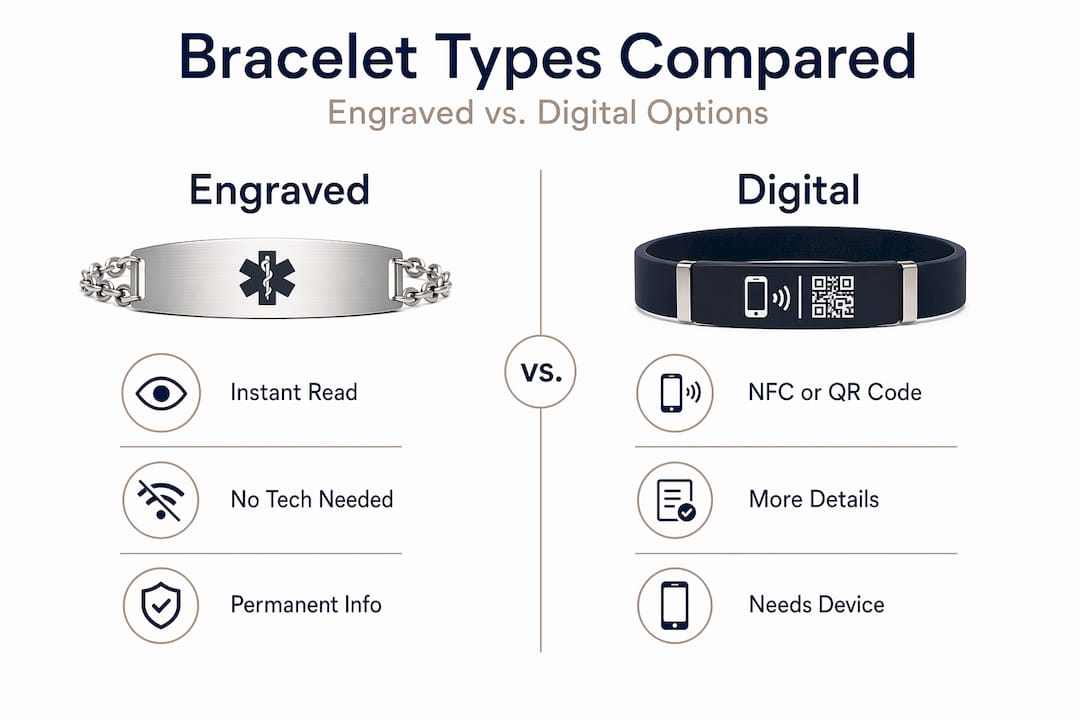
Physical engraving versus digital scanning represents the fundamental split in how adjustable medical bracelets deliver information. Engraved bracelets stamp your data directly onto a metal or silicone tag. It is always visible and requires zero technology to read. Digital versions use NFC chips or QR codes that a first responder scans with a smartphone to pull up a full medical profile stored online.
Both formats serve the same goal. The right choice depends on how much information you need to convey and how comfortable you are relying on technology in a crisis.
Who should wear an adjustable medical bracelet
Not everyone needs a medical bracelet, but for certain groups, wearing one is one of the most practical safety decisions you can make. Medical bracelets are recommended for anyone at risk of losing consciousness, experiencing a sudden medical episode, or being unable to communicate their health needs in an emergency.
The conditions that most commonly call for a medical bracelet include:
- Epilepsy: A seizure can leave you unresponsive and unable to explain your condition or medications.
- Severe allergies: Anaphylaxis can incapacitate you within minutes. A bracelet tells paramedics exactly what to avoid.
- Diabetes: Both hypoglycemia and hyperglycemia can cause confusion or unconsciousness that mimics intoxication.
- Heart conditions: Pacemakers and specific cardiac medications must be flagged before any emergency treatment.
- Autism or cognitive disabilities: Communication barriers make a bracelet especially valuable for conveying behavioral context to first responders.
- Blood clotting disorders: Certain conditions require specific treatment protocols that a bracelet can flag immediately.
Children and growing individuals
Adjustable medical bracelets for kids deserve special attention. Children cannot always articulate their medical needs, especially in a frightening situation. An adjustable child ID bracelet solves a practical problem too. Children’s wrists grow. A bracelet that fits a six-year-old will not fit the same child at nine. Adjustable sizing for children increases the likelihood that the bracelet stays on and stays comfortable, which directly improves how consistently a child wears it. When you adjust a medical bracelet for a growing child regularly, you protect them continuously rather than in gaps.

Pro Tip: For school-age children, include the name of their school and a teacher’s contact number alongside the standard medical information. First responders often reach a school contact faster than a parent during daytime hours.
Types of adjustable medical bracelets compared
Choosing between bracelet types is not just a style decision. It affects how quickly and reliably your information reaches the people who need it.
| Feature | Engraved bracelet | NFC bracelet | QR code bracelet |
|---|---|---|---|
| Readability | Instant, no device needed | Requires NFC-enabled smartphone | Requires smartphone camera |
| Information capacity | Limited to engraved space | Extensive digital profile | Extensive digital profile |
| Updateability | Requires new engraving | Update online anytime | Update online anytime |
| Tech dependency | None | Moderate | Low to moderate |
| Durability | Very high | High | High, but QR can degrade |
| Best for | Simplicity and reliability | Dynamic medical histories | Budget-friendly digital option |
Engraved bracelets
Engraved metal or silicone bands carry your information permanently on the surface. There is no app, no internet connection, and no battery required. Engraved bracelets remain readable even when wet, shifted, or handled roughly. That reliability is their biggest strength. The limitation is space. You can only fit so many characters on a tag, which forces you to prioritize your most critical details.
NFC-enabled bracelets
NFC silicone wristbands allow a paramedic to tap the bracelet with a compatible smartphone and instantly view a secure, detailed medical profile. The profile lives online and can be updated anytime without replacing the bracelet. This is a significant advantage for people whose medications or conditions change frequently. The trade-off is that the responder needs a working smartphone with NFC capability and ideally a data connection.
QR code bracelets
QR code bracelets work similarly to NFC but use a camera scan instead of a tap. They tend to cost less and work with virtually any modern smartphone. The practical concern is that QR codes printed on silicone or metal can wear or scratch over time, which is why choosing between immediate visibility and digital records depends on your lifestyle and how often you update your information.
Pro Tip: If you choose a digital bracelet, also engrave your single most critical piece of information on the bracelet itself. For example, “Severe penicillin allergy” or “Type 1 diabetic.” This gives responders an immediate heads-up even before they scan.
Choosing the right adjustable medical bracelet
The best bracelet is the one you actually wear every day. Comfort, material, and information clarity all play into that decision.
Fit and material
Proper fit keeps the bracelet visible and accessible at all times. A bracelet that is too loose spins and hides the engraving. One that is too tight becomes uncomfortable and gets removed. Adjustable closures solve this by letting you fine-tune the fit as your body changes.
Material choices each come with trade-offs:
- Stainless steel: Durable, hypoallergenic options available, and holds engraving sharply. Heavier than silicone but looks polished and professional.
- Silicone: Lightweight, flexible, and water-resistant. Great for sports and active lifestyles. Engraving can fade faster than metal over years of wear.
- Rubber: Similar to silicone but often less refined in appearance. Works well for children or high-contact activities.
For an adjustable sport medical bracelet, silicone or rubber with a secure clasp is typically the best choice. It stays put during physical activity and handles sweat and water without issue.
What to include on your bracelet
Prioritize ruthlessly. Space on an engraved tag is limited, so focus on:
- Your primary medical condition
- Life-threatening allergies
- Critical medications (especially blood thinners or insulin)
- Implanted devices
- One emergency contact number
For people managing diabetes, a resource on budgeting for diabetes supplies can help you think through the full picture of daily health management, of which a medical bracelet is one part. If you use a digital bracelet, your online profile can hold your full medication list, physician contacts, and insurance details.
How medical professionals use bracelet information
When paramedics arrive at an emergency scene, they are trained to look for a medical bracelet within the first moments of assessment. This is not incidental. Medical professionals are trained to spot and act on medical alert jewelry immediately because the information it carries directly shapes their treatment decisions.
Here is how the process typically unfolds:
- Scene assessment: Paramedics check the wrists and neck for medical ID jewelry as part of their initial patient evaluation.
- Information review: They read the engraving or scan the digital tag to identify conditions, allergies, and medications.
- Treatment adjustment: The bracelet data influences which medications they administer, which procedures they attempt, and which they avoid.
- Contact notification: Emergency contact information on the bracelet allows responders to reach family or caregivers quickly.
- Hospital handoff: The bracelet information travels with the patient and informs the receiving medical team, reducing the risk of errors during the transition of care.
Medical alert bracelets reduce risks like adverse medication reactions and treatment delays. A bracelet flagging a pacemaker, for example, prevents a responder from using a defibrillator in a way that could cause harm. For seniors, the value compounds further, as described in guidance on emergency contact jewelry for seniors, where multiple conditions and medications make clear communication even more critical.
My take on adjustable medical bracelets
I have spent years looking at how people manage chronic health conditions day to day, and one pattern stands out. People underestimate how much their medical situation can change. Medications get added or removed. Conditions progress. A bracelet engraved five years ago may not reflect today’s reality.
My honest view is that most people should start with a high-quality engraved bracelet and add a digital component if their medical history is complex or changes frequently. The reason is simple. Engraved information is guaranteed readable even when the bracelet shifts, gets wet, or a responder’s phone battery is dead. Technology is a great supplement. It should not be your only layer of protection.
I have also seen families delay getting a bracelet for their child because they cannot find one that fits well or looks appealing enough for the child to wear willingly. That delay is the real risk. An adjustable bracelet that a child actually wears beats a perfect bracelet sitting in a drawer. Comfort and appearance are not vanity concerns. They are compliance factors.
The best medical bracelet is the one that fits your life, reflects your current health status, and stays on your wrist. Review it once a year, the same way you review your insurance or emergency contacts.
— Mack
Find your perfect adjustable medical bracelet
If you are ready to take the next step, Divotiusa offers a full range of customizable medical alert bracelets designed to balance safety with everyday wearability. From engraved stainless steel cuffs to silicone sport bands, each piece is crafted to keep your critical health information visible and accessible.
Divotiusa’s adjustable options work for adults, athletes, and children alike, with sizing that grows with you. Every bracelet can be personalized with your specific medical details, and many styles pair with emergency contact cards for added protection. Whether you need a simple engraved tag or a tech-enabled design, you will find options built to meet real safety needs without sacrificing comfort or style. Your health information deserves to be on you, not in a drawer.
FAQ
What is an adjustable medical bracelet used for?
An adjustable medical bracelet displays your critical health information, such as conditions, allergies, and medications, so first responders can treat you safely when you cannot speak for yourself.
Who should wear an adjustable medical ID bracelet?
Anyone with epilepsy, severe allergies, diabetes, heart conditions, implanted devices, or communication disabilities benefits from wearing a medical ID bracelet at all times.
Are adjustable medical bracelets good for kids?
Yes. Adjustable medical bracelets for kids are specifically designed to resize as a child grows, ensuring continuous protection and comfort without needing frequent replacements.
What is the difference between an engraved and an NFC medical bracelet?
An engraved bracelet shows information directly on the surface with no technology required, while an NFC bracelet stores a full digital medical profile that a responder accesses by tapping it with a smartphone.
How often should I update my medical bracelet information?
Review and update your bracelet information at least once a year or whenever your medications, conditions, or emergency contacts change significantly.
Recommended
- Engraved Medical Bracelet Styles That Work for You - Divoti Inc.
- How to Select Medical Alert Metal Type Safely - Divoti Inc.
- Why Seniors Need Emergency Contact Jewelry - Divoti Inc.
- Medical Alert Bracelets, Cuff and Necklaces, Pet IDs, Car Gear
Shop related Divoti medical IDs: browse our custom engraved medical alert bracelets with free custom engraving. Most styles are HSA/FSA eligible.
About the author: Mack Johnson is Senior Operations Manager at Divoti Inc. in San Marcos, California, where he has led operations, marketing and customer experience since 2013. Before Divoti, he spent 12 years as a Public Health Services District Director with the Vermont Department of Health, leading regional public health operations and community health planning. He holds a bachelor’s degree from the University of Vermont. Connect with Mack on LinkedIn.