
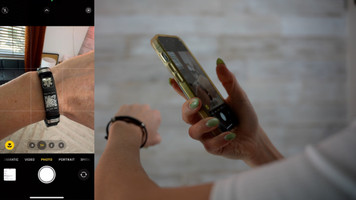
Why QR Code Medical IDs Are a Dangerous Placebo (And a Hacker’s Dream)
Posted by Mack Johson on May 27th 2026
Thinking ahead about medical emergencies is a smart, caring step for both you and your family. A QR code medical ID may seem like an easy, high-tech way to share vital health information, but relying on a standalone code can be a dangerous gamble when every second counts.
Many people assume a QR code medical ID connects securely to an Electronic Health Record (EHR)—the official hospital chart used by doctors and nurses. That assumption is usually wrong. In most cases, a standalone QR medical ID is simply a limited Personal Health Record (PHR): a profile you create yourself on a third-party website. It may look advanced, but it lacks clinical authority. Worse, in a real emergency, first responders may not scan it, the internet might not work, and it can expose your sensitive health information to severe cybersecurity risks.
EHR vs. PHR: Understanding What You Are Actually Getting
To understand why a QR code falls short, you have to look at the data it connects to. Scanning a novelty QR code does not magically pull up your official hospital chart.
| Feature | Electronic Health Record (EHR) | QR Code Personal Health Record (PHR) |
| Primary Manager | Healthcare providers, hospitals, and clinics. | You (the consumer/patient). |
| Data Sources | Clinical systems (lab results, doctor's notes, pharmacy). | Manual data entry by the user. |
| Core Purpose | Comprehensive clinical care and official documentation. | Basic emergency information sharing. |
| Security & Access | Highly regulated, strictly controlled by healthcare networks. | Controlled by third-party startup platforms. |
| Legal Status | An official, legally binding clinical record. | Not an official legal medical record. |
The Harsh Reality of QR Medical IDs
Here is the candid truth about why these codes often fail in the field:
-
First responders don't scan them: In a life-or-death situation, seconds matter. Paramedics simply do not have the time—or the standard operating procedure—to pull out their personal smartphones, scan a random QR code, and wait for a website to load.
-
They rely entirely on the internet: If you have a medical emergency in a cellular dead zone, deep inside a concrete basement, or anywhere without Wi-Fi, the QR code is useless because it cannot load your health data.
-
They create an unmanaged security honeypot: Unless the QR code links directly to a major, secure hospital portal, you are trusting your data to a third-party startup's database. Gathering sensitive health data in one poorly managed place creates a prime target for hackers.
The Security Nightmare: The "Honeypot" Effect
When you sign up for a third-party QR medical ID, you are placing your personal information into a centralized digital "honeypot." Healthcare data is highly valuable on the dark web because it includes details that are virtually impossible to change: your date of birth, emergency contacts, medical conditions, allergies, and core identity information.
Without rigorous, enterprise-grade cybersecurity management, these centralized third-party databases become easy targets:
-
Over-Privileged Access: Many small tech companies do not use strict "Zero Trust" architecture. If one employee’s account is compromised through a phishing email, a hacker could gain broad access to the entire database of patient records.
-
Delayed Security Patching: Smaller QR code vendors rarely have 24/7 security operations centers to patch vulnerabilities immediately, leaving known digital backdoors wide open.
-
Irreversible Damage: Unlike a compromised credit card number, your medical history and identity details cannot simply be canceled and replaced once they are leaked.
The Safer Alternative: Your Phone’s Built-In Medical ID
Instead of buying a QR code product that puts your privacy at risk and fails without internet access, use the powerful emergency tool already built into your smartphone. Your phone’s Medical ID stores key health details locally on your device, avoiding the hacker honeypot entirely while ensuring your information is available exactly when EMTs need it.
Here is why your phone's default Medical ID is the true gold standard:
-
It Bypasses the Lock Screen Safely: If you are unconscious, first responders can access your Medical ID directly from your locked screen to see allergies, medications, and conditions. They cannot access your private texts, photos, apps, or other personal data.
-
Paramedics Are Trained to Look for It: First responders are universally trained to check the lock screen of an iPhone or Android for this exact emergency profile. It is the first place they check after looking for an engraved medical bracelet.
-
It Works 100% Offline: Because your medical data is saved directly on your device, first responders can read it instantly—even if you have zero bars of cell service.
-
It Auto-Texts Loved Ones: If you use your phone’s SOS feature to call 911, the system can automatically text your designated emergency contacts with your real-time location.
How to Set It Up in 2 Minutes
Setting up your digital Medical ID is fast, completely free, and highly secure.
For iPhone Users
Watch the quick tutorial:
https://youtube.com/shorts/21C1jT4Tfg4
-
Open the Health app (the white icon with a red heart).
-
Tap your profile picture in the top right, then tap Medical ID.
-
Tap Edit to add your medical conditions, allergies, medications, and emergency contacts.
-
Scroll to the bottom and ensure Show When Locked is toggled ON.
For Android Users
Watch the quick tutorial:
https://youtube.com/shorts/SCE4wzDtIww
-
Open the Settings app.
-
Scroll down and tap Safety & emergency.
-
Tap Medical info to add your health details.
-
Ensure the setting for Show on Lock screen is toggled ON.
The Expert Recommendation: Set up your smartphone’s built-in Medical ID today, then pair it with a traditional metal medical bracelet engraved with "See Phone Med ID." This gives EMTs a clear, familiar signal and helps them access your critical medical details instantly, securely, and offline—without depending on an unmanaged, hackable QR code.